


Looking for the best car audio installation in Montclair, CA? Discover expert tips, top brands, and why Audio Vision is the go-to destination for high-quality car sound systems.
Product Brand: Audio Vision
Product Currency: USD
Product Price: 299
Product In-Stock: InStock
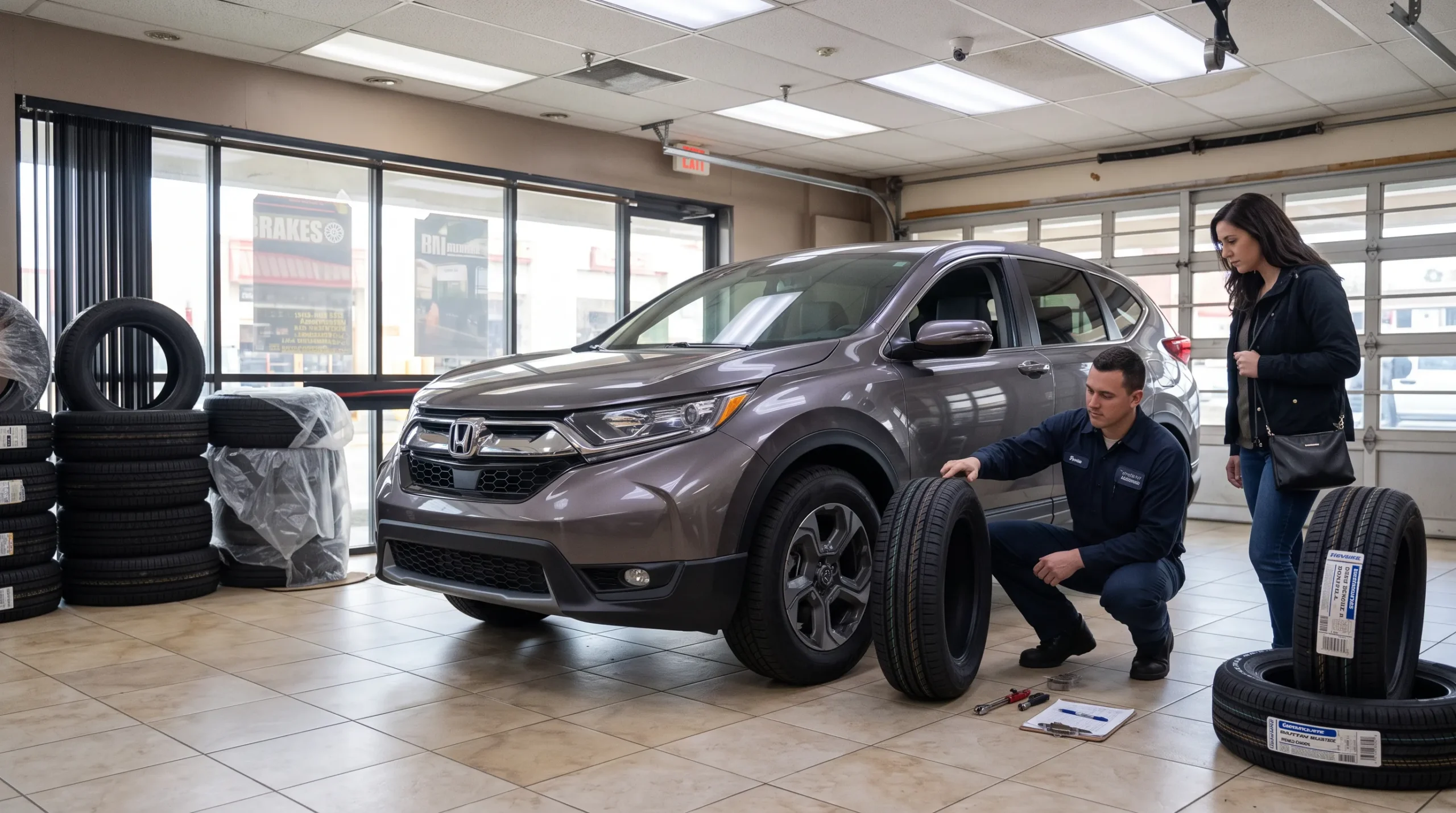
How to choose a tire shop is something every vehicle owner should understand before buying a new set of tires. Whether you’re replacing worn tires on your daily commuter, shopping for a family SUV, or selecting tires for a truck with aftermarket wheels, the shop you choose can make a difference in how your vehicle handles, rides, and wears its tires.
At first glance, buying tires seems simple. You find the size printed on the sidewall, choose a brand, and schedule installation.
But there’s more to it.
The right tire shop should check your vehicle’s specifications, ask about how you use your car, explain your tire options, and install everything correctly. That includes mounting, balancing, tire pressure, and checking whether your vehicle needs a wheel alignment.
A shop should also explain the tire manufacturer’s warranty and what maintenance you’ll need after installation.
At Audio Vision, we’ve served the Inland Empire since 2006, providing automotive customization services, including tires, custom wheels, and suspension upgrades. Our shop is located at 5521 Holt Blvd, Montclair, CA 91763.
If you’re shopping for tires in Montclair, CA, Ontario, CA, Rancho Cucamonga, CA, or another nearby community, this guide will help you ask the right questions before making your decision.
Your tires are the part of the vehicle that touches the road.
They affect traction, braking, steering response, ride comfort, and how your vehicle behaves in wet conditions.
That’s why buying the correct tires matters.
According to the National Highway Traffic Safety Administration (NHTSA), selecting suitable tires and maintaining them correctly are important parts of vehicle safety.
The agency recommends checking tire size, tread condition, inflation pressure, and maintenance requirements.
But a tire shop does more than help you pick a product.
The technicians also need to mount the tires correctly, balance the wheels, and account for the vehicle’s tire pressure monitoring system.
A dependable tire shop should be able to answer several questions without confusion.
It should explain why a particular tire fits your vehicle, what it is designed for, and how it compares with other available options.
The shop should also inspect your existing tires and explain any unusual wear patterns.
If the tires are wearing unevenly, installing new ones without addressing the underlying problem may cause the same issue to return.
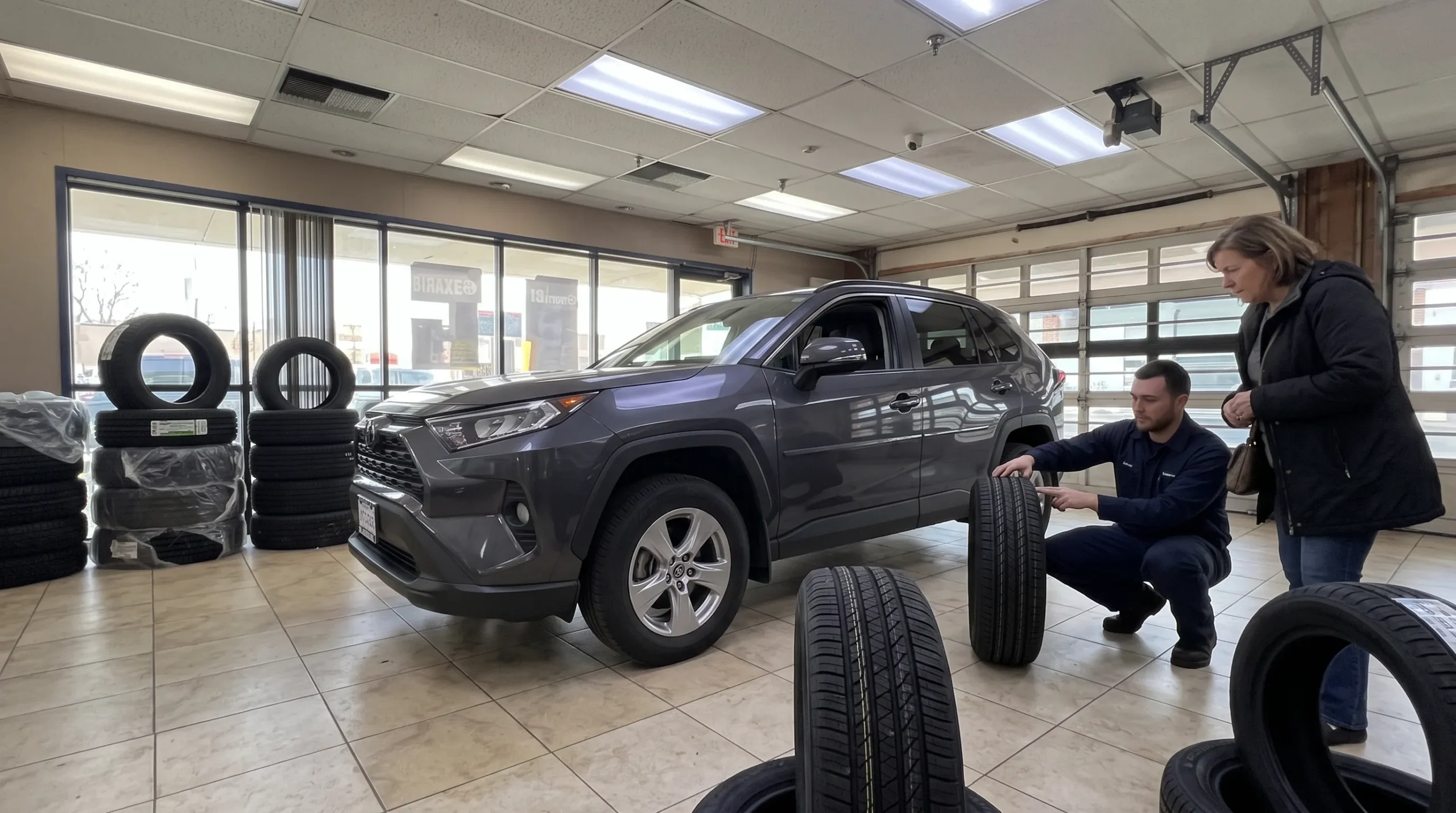
Here’s what matters: a good tire shop helps you understand the tire and the installation, not just the brand name on the sidewall.
The first question to ask a tire shop is whether it will verify the correct tire specifications for your vehicle.
Don’t rely only on the size printed on the tires currently installed.
A previous owner may have changed the wheels or installed a different size.
Most vehicles have a tire information label on the driver’s doorjamb.
You can also check the owner’s manual.
The U.S. Tire Manufacturers Association (USTMA) recommends using the vehicle manufacturer’s specifications when selecting replacement tires.
These include tire size, load index, and speed rating.
Consider an example tire size:
225/45R18 95W
| Marking | Meaning |
|---|---|
| 225 | Nominal tire width in millimeters |
| 45 | Sidewall height as a percentage of width |
| R | Radial tire construction |
| 18 | Wheel diameter in inches |
| 95 | Load index |
| W | Speed rating |
The load index and speed rating are just as important as the size.
A tire that fits onto your wheel isn’t automatically suitable for your vehicle.
If you’ve installed custom wheels, the original tire size may not be appropriate for the new wheel dimensions.
The shop needs to consider wheel width, diameter, vehicle clearance, load requirements, and the manufacturer’s approved fitment.
Audio Vision offers custom wheels and tire services, allowing customers to discuss wheel and tire compatibility together.
When learning how to choose a tire shop, look for a business that explains the differences between tire categories.
Not every tire is designed for the same conditions.
The right choice depends on your vehicle, local weather, and how you use it.
All-season tires are designed for a range of everyday road conditions.
Many are suitable for commuting, highway travel, and moderate wet weather.
But all-season tires aren’t all identical.
Some emphasize comfort and tread life. Others place more attention on steering response and wet traction.
Touring tires often focus on ride comfort, reduced road noise, and longer tread life.
They may appeal to commuters who spend considerable time traveling between Montclair, CA and Ontario, CA.
Ask the shop how different touring tires compare in wet-road traction and comfort.
Summer tires are designed for warm-weather conditions.
Some are developed for sports cars and other vehicles where cornering and steering response matter.
They aren’t intended for snow or freezing conditions.
If your trips frequently take you to colder mountain areas, mention that before choosing summer tires.
All-terrain tires may suit trucks and SUVs used on both paved roads and unpaved surfaces.
Their tread patterns are designed to handle a mixture of conditions.
But aggressive tread designs can affect road noise and ride comfort.
Ask how the selected tire behaves on ordinary highways if most of your travel is on pavement.
Winter tires are designed for colder conditions, including snow and ice.
They may be worth considering for vehicles regularly used in mountain winter conditions.
The NHTSA tire buying guide explains the general differences between all-season, summer, winter, and all-terrain tires.
A shop should help you choose based on the conditions your vehicle actually encounters.
A good tire recommendation starts with a conversation.
Someone using a compact car for short trips has different needs from a truck owner who regularly carries equipment or tows a trailer.
When choosing a tire shop, pay attention to the questions the staff asks.
They may want to know:
These details help narrow down which tire models deserve consideration.
Tires must support the vehicle’s weight and intended load.
A tire with an unsuitable load rating may not meet the vehicle’s requirements.
This is especially relevant for SUVs, trucks, vans, and vehicles carrying substantial cargo.
The USTMA advises that replacement tires should meet the vehicle manufacturer’s load-carrying specifications.
Electric vehicles may have particular requirements related to vehicle weight, torque characteristics, and tire noise.
The correct tire depends on the exact vehicle and manufacturer recommendations.
Don’t assume any tire labeled for an electric vehicle is automatically the right fit.
Ask the shop to check the manufacturer’s specifications.
This is one of the most useful questions to ask before scheduling tire installation.
Mounting and balancing are different steps.
Both matter.
Mounting is the process of fitting the tire onto the wheel.
The technician must use suitable equipment and confirm that the tire is seated correctly.
The process should also account for the wheel’s design and any installed sensors.
Improper tire mounting can damage the tire, wheel, or related components.
Wheel balancing involves measuring and correcting uneven weight distribution in the rotating tire-and-wheel assembly.
A wheel that isn’t balanced correctly may cause noticeable vibration at certain road speeds.
The NHTSA recommends that new tires be balanced when installed.
A poorly balanced wheel can create shaking that you feel through the steering wheel, seat, or vehicle body.
The exact symptom depends on where the imbalance occurs.
Before booking, ask whether the shop balances each new tire-and-wheel assembly.
Some tire shops offer road-force balancing, which uses specialized equipment to measure additional tire-and-wheel characteristics under a simulated load.
This can be useful when diagnosing certain vibration problems.
It isn’t necessary for every tire installation.
Ask whether the shop offers this service and whether your vehicle needs it.
Audio Vision’s custom wheel and tire services describe mounting and balancing as part of its installation work.
Many modern vehicles have a Tire Pressure Monitoring System, usually called TPMS.
This system warns when tire pressure falls below a specified threshold.
There are different TPMS designs.
Some use sensors inside the wheel, while others estimate pressure loss through wheel-speed information.
Before getting new tires, ask whether the shop will:
Not every vehicle needs the same TPMS procedure.
The NHTSA explains that tire pressure monitoring systems warn when tire pressure becomes significantly low.
But a TPMS warning isn’t a substitute for checking tire pressure manually.
A tire can be underinflated before the dashboard warning appears.
Tell the shop before your appointment.
It may indicate low pressure, a sensor issue, or another problem with the monitoring system.
The shop should determine the cause rather than assuming new tires will automatically correct it.
Wheel alignment is another subject worth discussing before buying new tires.
Tires can wear unevenly when the vehicle’s wheels are not positioned within the intended alignment specifications.
The problem may develop gradually without an obvious warning.
Wheel alignment involves measuring and adjusting wheel angles such as camber, caster, and toe where the vehicle allows adjustment.
Incorrect alignment can contribute to pulling, steering problems, and unusual tread wear.
The USTMA Tire Care Essentials guide recommends checking alignment when signs of trouble appear.
Not necessarily.
New tire installation and wheel alignment are separate services.
But an alignment check may be advisable if your old tires show uneven wear, the steering wheel sits off-center, or the car pulls to one side.
You should also discuss alignment after suspension modifications or a hard impact with a pothole.
Lowering springs, coilovers, and other suspension changes can affect wheel alignment.
If you’ve modified your suspension, tell the tire shop before choosing the replacement tires.
Audio Vision offers suspension upgrades and lowering kits.
Its tire service page also lists alignment services. Confirm alignment scheduling and availability when booking.
Tires can age even when they haven’t accumulated many miles.
That’s why the manufacturing date is worth understanding.
A tire has a Department of Transportation identification marking on its sidewall.
For modern tires, the last four digits of the date portion indicate the week and year of manufacture.
For example:
2525 means the tire was manufactured during the 25th week of 2025.
The complete date code may appear on only one side of the tire.
You can read more in the NHTSA’s tire identification guidance.
Not always.
Tire condition depends on factors such as storage, exposure, use, and manufacturer guidance.
The NHTSA notes that some vehicle and tire manufacturers recommend replacement at ages ranging from six to ten years, even when tread remains.
That doesn’t mean all tires have a universal six-year expiration date.
A shop should be able to explain the manufacturer’s recommendations for the tire you’re considering.
Ask the technician to check for:
A tire with adequate tread can still need replacement because of damage or age.
Sometimes only two tires appear worn.
You might wonder whether replacing all four is necessary.
The answer depends on your vehicle’s specifications, the condition of the remaining tires, and whether it uses all-wheel drive or another drivetrain arrangement with special tire requirements.
The USTMA tire replacement guidance recommends replacing all four tires together when practical.
When only two tires are replaced, the association generally recommends placing the newer tires on the rear axle to help maintain vehicle stability on wet roads.
This guidance should be applied alongside the vehicle manufacturer’s requirements.
Some all-wheel-drive systems have restrictions concerning differences in tire circumference or tread depth.
Installing tires with substantially different dimensions or wear levels can create mechanical concerns on certain vehicles.
Ask the shop to check the owner’s manual before recommending a partial replacement.
Mixing different tire designs or sizes can affect handling and traction.
The USTMA recommends following the vehicle manufacturer’s specifications and consulting a tire professional when replacing fewer than four tires.
A tire shop should explain why a proposed combination is suitable rather than simply saying the tires fit.
Tire warranties can be confusing because different types of coverage address different problems.
Before choosing a tire shop, ask what warranty applies to the exact tire model.
Some tire manufacturers provide coverage for qualifying material or workmanship defects.
The terms and exclusions vary.
Coverage may depend on tire condition, age, mileage, ownership, or proper maintenance.
Certain tires come with a limited mileage-based treadwear warranty.
This isn’t a guarantee that every owner will reach the stated mileage.
Warranty claims may require rotation records, correct inflation, proper alignment, and other maintenance documentation.
Some tire categories do not include a mileage warranty.
Some shops or manufacturers offer separate protection for certain road-related tire damage.
Coverage and exclusions differ by program.
Ask whether a puncture, impact damage, or another problem would be covered under the specific terms.
The installation shop may provide its own workmanship warranty.
This is separate from the tire manufacturer’s material warranty.
Audio Vision’s tire service information states that its tires have manufacturer warranty coverage and that the shop supports its installation work.
Ask for the terms that apply to the tire and service you select.
A nearby location is convenient, but location alone doesn’t tell you how carefully a shop works.
Look at the quality of the information you receive.
A shop should explain the difference between recommended tire models.
You should understand what each tire is designed for and why it suits your vehicle.
If one product is intended for quiet highway travel and another for more aggressive cornering, ask how those differences may affect your everyday use.
The condition of your old tires tells a story.
Uneven shoulder wear may suggest an alignment or inflation issue.
Wear concentrated near the center can relate to inflation and operating conditions.
Unusual wear patterns deserve investigation rather than a guess.
A shop that notices and explains these patterns can help you avoid repeating the same problem.
Reviews can provide insight into the way a business treats customers.
Pay attention to comments about:
One review rarely tells the whole story.
Look for patterns across several customers.
When you’re learning how to choose a tire shop, one of the best signs is straightforward communication.
The staff should be able to explain the tire’s specifications and installation requirements without pressuring you into a choice you don’t understand.
Knowing the installation steps makes it easier to understand what the shop is doing.
The exact process depends on the vehicle, tire, and wheel.
The technician should confirm that the selected tires match the vehicle’s approved specifications.
If the vehicle has aftermarket wheels, the wheel dimensions and tire compatibility also need checking.
The shop removes the wheel assemblies and takes the old tires off when replacement is needed.
The wheels should be checked for visible damage, corrosion, or other issues that could affect mounting.
Depending on the vehicle, the technician may inspect valve stems and TPMS parts.
Damaged components may need attention before installation continues.
The new tires are installed on the wheels using suitable mounting equipment.
The technician checks proper seating and follows the tire and wheel manufacturers’ instructions.
Each tire-and-wheel assembly should be balanced to help prevent vibration.
The NHTSA recommends balancing new tires at installation.
The technician mounts the assemblies and tightens the fasteners using the vehicle manufacturer’s torque specification.
Tire inflation should be set according to the vehicle’s requirements, with any needed TPMS service completed.
Before pickup, ask whether the shop found any damaged components, unusual tire wear, or alignment concerns.
This is also a good time to confirm rotation guidance and warranty information.
Buying suitable tires is only part of keeping them in good condition.
Regular maintenance affects tire wear, traction, and service life.
The USTMA recommends checking tire pressure at least once a month, while the tires are cold.
Cold means the vehicle has generally been parked for at least three hours.
Use the recommended inflation pressure on the vehicle’s tire information label or in the owner’s manual.
Don’t use the maximum pressure molded into the tire sidewall as your everyday inflation target.
The NHTSA says tires should be replaced when tread depth reaches 2/32 of an inch.
Tires may need attention sooner because of damage or conditions that demand greater wet traction.
Many tires have built-in treadwear indicators that become level with the surrounding tread as the tire wears.
Rotation can help even out tread wear when the vehicle and tire configuration permit it.
The NHTSA advises following the vehicle manufacturer’s recommended schedule.
For certain vehicles, rotation every 5,000 to 8,000 miles may be appropriate when recommended.
Staggered tire sizes, directional tread patterns, and other arrangements can limit which rotation patterns are possible.
If your vehicle begins shaking, pulling to one side, or wearing tires unevenly, have it inspected.
Possible causes include wheel balance, alignment, damaged components, or tire problems.
Don’t assume the new tires are responsible without a proper check.
If you’re shopping for tires around the Inland Empire, think about the kind of travel you do most often.
Someone commuting on local highways may want a different tread design from a truck owner planning occasional off-road trips.
A tire shop should account for those needs.
Audio Vision is located in Montclair, CA and offers tire selection and installation.
You can discuss tire sizing, available products, balancing, and installation requirements with the team.
Customers from Ontario, CA can visit Audio Vision’s Montclair shop.
If you spend considerable time on freeways, mention whether you want a quieter ride or stronger wet-road traction.
Vehicle owners from Rancho Cucamonga, CA may have different needs depending on whether they use a sedan, SUV, or pickup.
If you travel into mountain areas during winter, tell the shop about those conditions.
Customers from Pomona, CA and Claremont, CA can contact Audio Vision about replacement tires and wheel fitment.
If your vehicle has aftermarket wheels or lowered suspension, mention those modifications before scheduling.
Audio Vision also welcomes customers from Chino, CA and Chino Hills, CA.
Customers from Upland, CA, Fontana, CA, and surrounding communities can contact the shop to discuss tire availability and appointments.
Audio Vision’s physical location is in Montclair, CA, not in the other cities listed here.
Audio Vision has served the Inland Empire since 2006.
Our business offers automotive customization services, including tires, custom wheels, and suspension equipment.
If you’re deciding how to choose a tire shop, our team can discuss your vehicle’s specifications and the tire options available for your needs.
Our tire services include options for different vehicle types and road-use requirements.
Whether you’re replacing worn tires or making changes to your vehicle’s wheel setup, we can discuss compatible sizes and available tire models.
Audio Vision’s custom wheels and tires service page describes mounting, balancing, and fitment checks.
These steps help prepare your vehicle for normal road use after installation.
Planning new wheels with your tires?
Visit our wheel services page to learn more about available options.
Wheel width, diameter, offset, and tire sizing should be considered together.
Audio Vision also offers suspension upgrades and lift and lowering kits.
Its tire service information lists alignment among its services.
Ask about alignment availability and scheduling if your vehicle has unusual tire wear or recent suspension changes.
Audio Vision is located at 5521 Holt Blvd, Montclair, CA 91763.
We’ve been serving the Inland Empire automotive community since 2006, helping customers with vehicle electronics, wheels, tires, suspension, and other customization projects.
Contact us to discuss your vehicle and the tire options currently available.
Use this checklist when contacting a tire shop.
You don’t have to memorize tire specifications. A shop should help you understand them.
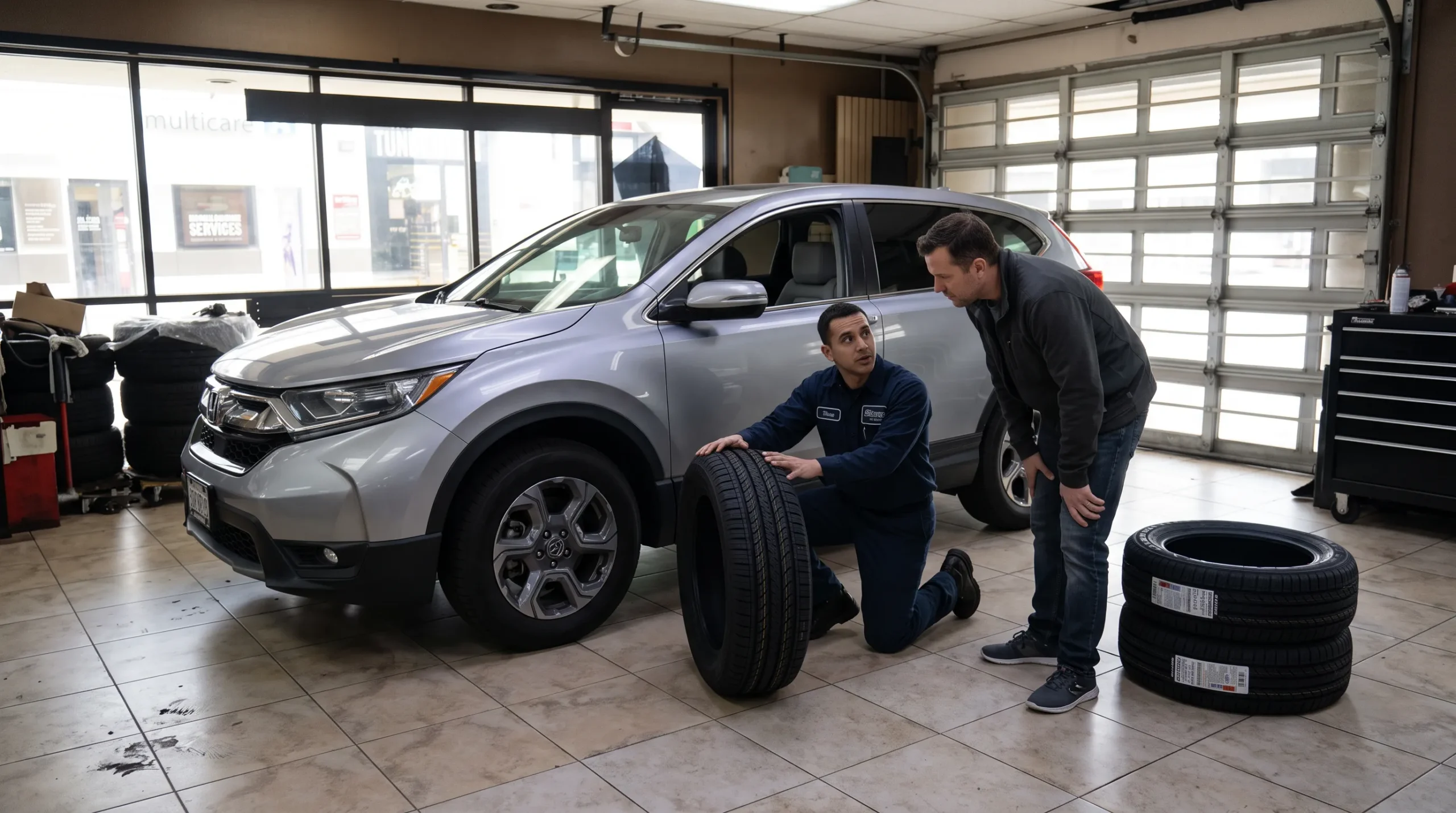
If a shop can explain these points clearly, you’ll be in a better position to choose the right tires.
Start by looking for a tire shop that checks your vehicle’s specifications before recommending tires. Ask whether the shop offers professional mounting, balancing, TPMS service, and alignment checks when needed. Read customer reviews for comments about workmanship and follow-up service. The shop should also explain tire categories, manufacturer warranties, and maintenance requirements. Audio Vision offers tire and wheel services from its Montclair, CA location.
Ask whether the tires match the manufacturer’s recommended size, load index, and speed rating. Discuss your usual road conditions and whether comfort, wet traction, tread life, or another characteristic matters most. Confirm that the installation includes mounting and balancing, and ask whether your vehicle needs TPMS attention or alignment. You should also understand the manufacturer’s warranty before selecting a tire.
Wheel balancing is a standard part of professional tire installation, but you should confirm that it is included in the service being scheduled. Balancing helps correct uneven weight distribution in the tire-and-wheel assembly, reducing the chance of vibration at road speeds. The NHTSA recommends balancing new tires during installation. Audio Vision lists mounting and balancing among its wheel and tire services.
Not necessarily. New tire installation does not automatically mean the alignment needs adjustment. Still, an alignment check is worth discussing if the old tires show uneven wear, the steering wheel sits off-center, the vehicle pulls to one side, or suspension components have recently been changed. Incorrect alignment can cause new tires to wear unevenly. Ask the tire shop to inspect your vehicle before deciding.
The USTMA generally recommends replacing all four tires together. If only two are replaced, its guidance usually calls for installing the newer tires on the rear axle for wet-road stability. Some all-wheel-drive vehicles have stricter requirements concerning tire size and tread-depth differences. The correct decision depends on the vehicle manufacturer and the condition of the tires being retained.
The time depends on the vehicle, wheel design, tire size, and services being performed. Audio Vision’s tire service information says installation of four tires often takes around an hour under typical conditions, but additional work can extend the appointment. TPMS problems, special wheels, old tire damage, or alignment service may require more time. Call ahead with your vehicle information to discuss scheduling.
Audio Vision offers new tires, custom wheels, mounting, balancing, and related automotive services at 5521 Holt Blvd, Montclair, CA 91763. The shop welcomes customers from Ontario, CA, Rancho Cucamonga, CA, Pomona, CA, Claremont, CA, Chino, CA, Chino Hills, CA, Upland, CA, and nearby communities. Call (909) 983-4500 or visit the Audio Vision contact page to discuss available tires and schedule an appointment.
Choosing the right tires begins with understanding what your vehicle needs.
The correct tire size, load rating, and tread design matter. So do proper mounting, wheel balancing, alignment checks, and regular maintenance.
A shop should explain these details before installing your new tires.
If you’re trying to figure out how to choose a tire shop in the Inland Empire, Audio Vision is available to discuss tire options for your car, truck, or SUV.
Whether you need replacement tires for daily commuting or you’re planning new wheels and tires together, our team can help you review the available options.
Business Name: Audio Vision
Address: 5521 Holt Blvd, Montclair, CA 91763
Phone: (909) 983-4500
Business Hours: Monday through Sunday, 9:00 AM to 7:00 PM
Website: https://audiovisionie.com
Tire Services: View Tire Selection and Installation
Custom Wheels: See Available Wheel Services
Suspension Services: Learn About Suspension Upgrades
Ready to discuss new tires?
Call (909) 983-4500 or visit our Contact Us page to schedule an appointment.
Tell us your vehicle’s year, make, model, and current tire size.
If you have aftermarket wheels or suspension modifications, mention those too.
Our team can discuss available tires, fitment, installation, and any additional services your vehicle may need.
The following government, tire industry, and business resources support the information about tire safety, selection, installation, maintenance, and local services.
Publisher: National Highway Traffic Safety Administration, U.S. Department of Transportation
Publication Date: Not specified on the referenced page
URL: https://www.nhtsa.gov/vehicle-safety/tires
Official guidance concerning tire selection, sizing, tire identification markings, tread depth, inflation, balancing, alignment, tire aging, and tire maintenance.
Publisher: U.S. Tire Manufacturers Association
Publication Date: Not specified on the referenced page
URL: https://www.ustires.org/tire-care-safety/replacing-tires
Tire industry guidance about replacement tire sizing, load index, speed rating, replacing fewer than four tires, and proper tire placement.
Publisher: U.S. Tire Manufacturers Association
Publication Date: Not specified on the referenced page
URL: https://www.ustires.org/tire-care-safety/tire-care-essentials
Information about checking inflation pressure, tread depth, tire rotation, alignment, and tire pressure monitoring systems.
Publisher: U.S. Tire Manufacturers Association
Publication Date: Not specified on the referenced page
URL: https://www.ustires.org/tire-care-safety/tire-repair-basics
Industry guidance concerning puncture repair limitations, tire removal and inspection, and situations when a damaged tire should not be repaired.
Publisher: Audio Vision
Publication Date: Not specified
URL: https://audiovisionie.com/services/tires/
Information about tire products, installation, balancing, alignment, maintenance, and warranty coverage offered by Audio Vision.
Publisher: Audio Vision
Publication Date: Not specified
URL: https://audiovisionie.com/service/custom-wheels-and-tires-in-montclair-ca/
Business information covering wheel and tire fitment, tire mounting, balancing, TPMS considerations, and installation work.
Publisher: Audio Vision
Publication Date: Not specified
URL: https://audiovisionie.com/services/wheels/
Information about available wheels, vehicle fitment, and professional wheel installation.
Publisher: Audio Vision
Publication Date: Not specified
URL: https://audiovisionie.com/services/suspension-upgrades/
Information about springs, coilovers, and other suspension modifications that can affect tire fitment and wheel alignment.
Looking for the best car audio installation in Montclair, CA? Discover expert tips, top brands, and why Audio Vision is the go-to destination for high-quality car sound systems.
Product Brand: Audio Vision
Product Currency: USD
Product Price: 299
Product In-Stock: InStock

Acima, a flexible lease-to-own option that helps you get the car upgrades you love—without needing perfect credit. Whether you’re looking for car audio, video, security systems, window tint, wheels, auto lighting, or accessories, Acima makes it easy with no credit needed and convenient payment options. Get what you want today and pay over time, hassle-free!

Snap Finance is here to help you get the car audio, video, security, window tint, wheels, lighting, and accessories you need today. With Snap Finance, you can shop now and pay later, thanks to their flexible payment plans that consider more than just your credit score. Applying is fast and easy, and you’ll receive a decision in seconds. Take advantage of stress-free payment options that fit your payday schedule, so you can upgrade your ride without the wait!
Explore the many services we offer by clicking the boxes below


|
|
|
|
|
|
|
|
|
|
|
|
|
|
|
|
How to Choose a Tire Shop: Questions to Ask Before You Buy New Tires
|
How to Choose a Tire Shop: Questions to Ask Before You Buy New Tires
|
How to Choose a Tire Shop: Questions to Ask Before You Buy New Tires
|
How to Choose a Tire Shop: Questions to Ask Before You Buy New Tires
|
|
|
|
|
|
|
|
|
|
|
|
|
|
|
|
|
|
|
|
|
|
|
|
|
|
|