
Looking for the best car audio installation in Montclair, CA? Discover expert tips, top brands, and why Audio Vision is the go-to destination for high-quality car sound systems.
Product Brand: Audio Vision
Product Currency: USD
Product Price: 299
Product In-Stock: InStock
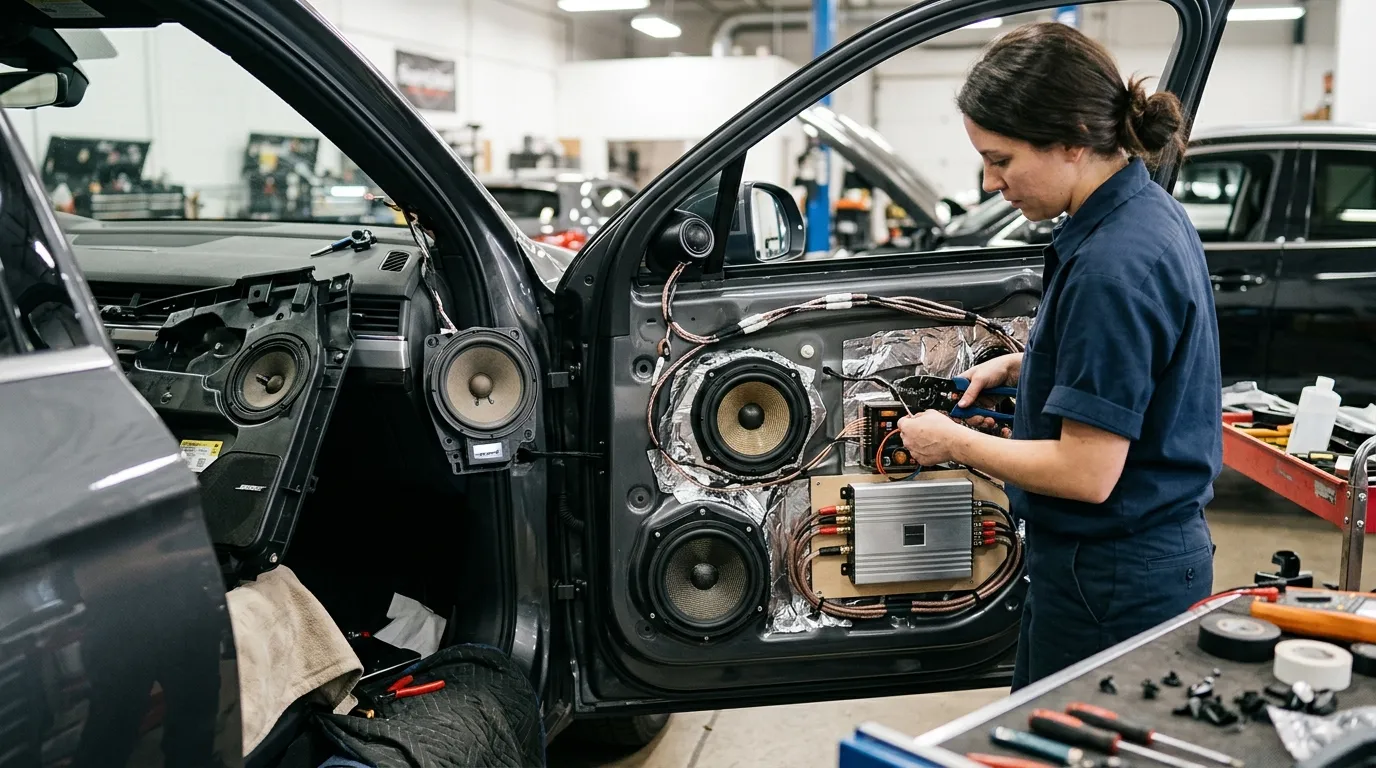
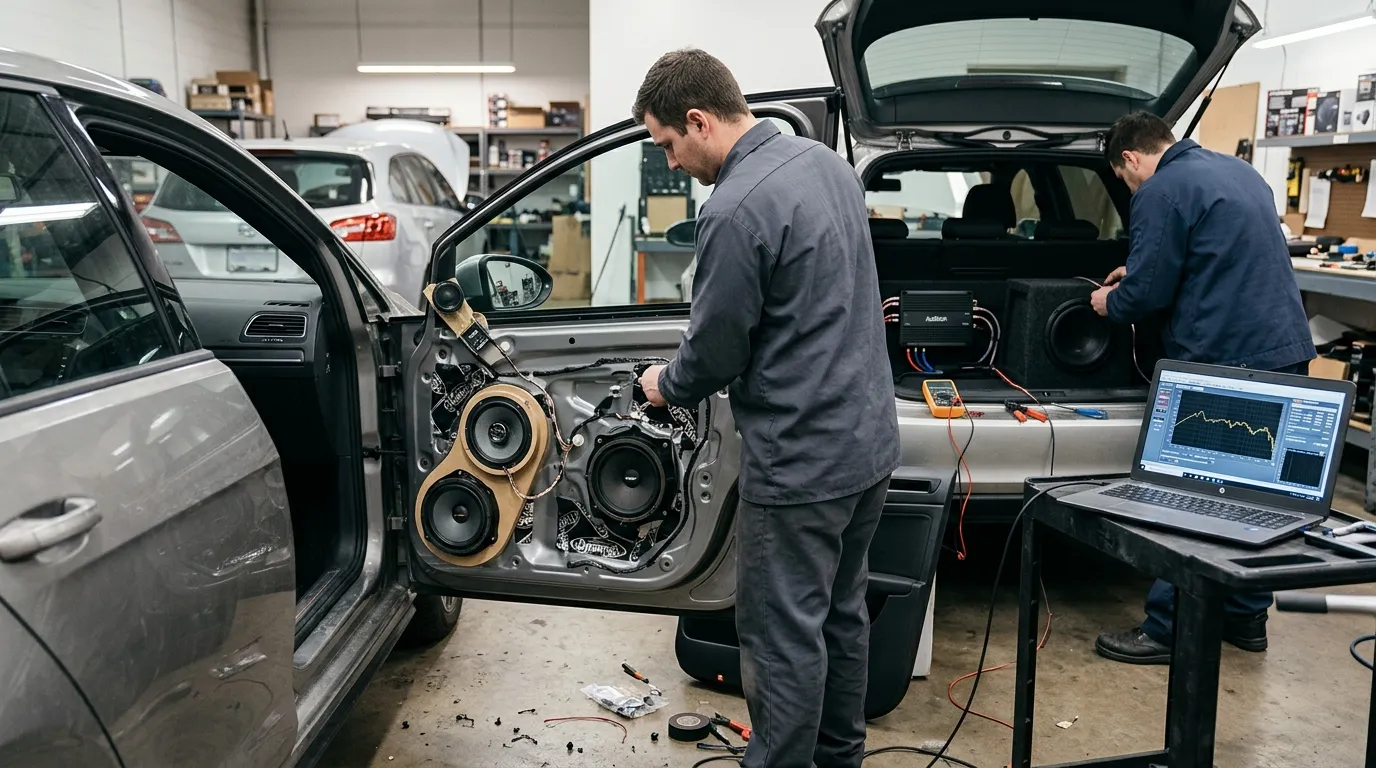
Replacing a factory Bose car audio system can improve clarity, output, bass response, and tuning, but only if the upgrade is planned around the way the original system works. Bose systems are not just a group of speakers with a logo on them. Bose says its automotive systems are engineered for specific vehicle models, including speaker placement, amplification, software, signal processing, and vehicle-specific tuning.
That changes the upgrade process.
A simple speaker swap may help in some cars. In others, changing speakers without dealing with the factory amplifier or processing can leave the system sounding weak, unbalanced, or even worse than before.
For drivers in Montclair, CA, Ontario, CA, and Pomona, CA, the best results usually come from identifying what part of the Bose system is holding the sound back and replacing that part first.
This guide explains what actually improves when replacing a factory Bose system, which upgrades tend to make the biggest difference, and why some changes require more planning than they appear to.
Audio Vision works with factory premium-audio systems and offers car audio installation, car speakers, car amplifiers, car subwoofers, and related integration work from its Montclair, CA shop.
A factory Bose system is usually much more connected to the vehicle than a traditional radio-and-four-speaker setup.
Bose states that its automotive systems are engineered for individual vehicle models. That process can include:
Bose also says it does not sell an aftermarket replacement car-audio system because its automotive equipment is developed together with vehicle manufacturers for specific models.
That means replacing a factory Bose car audio system is not the same as removing four standard speakers and installing four aftermarket speakers.
The factory amplifier may send different frequency ranges to different speakers.
A dash speaker may only receive mids and highs.
A door woofer may only receive lower frequencies.
A center-channel speaker may carry processed information that is different from what the left and right door speakers receive.
Some systems also use warning chimes, navigation prompts, hands-free calling, active noise functions, or vehicle sounds through the same audio network.
Here is why this matters.
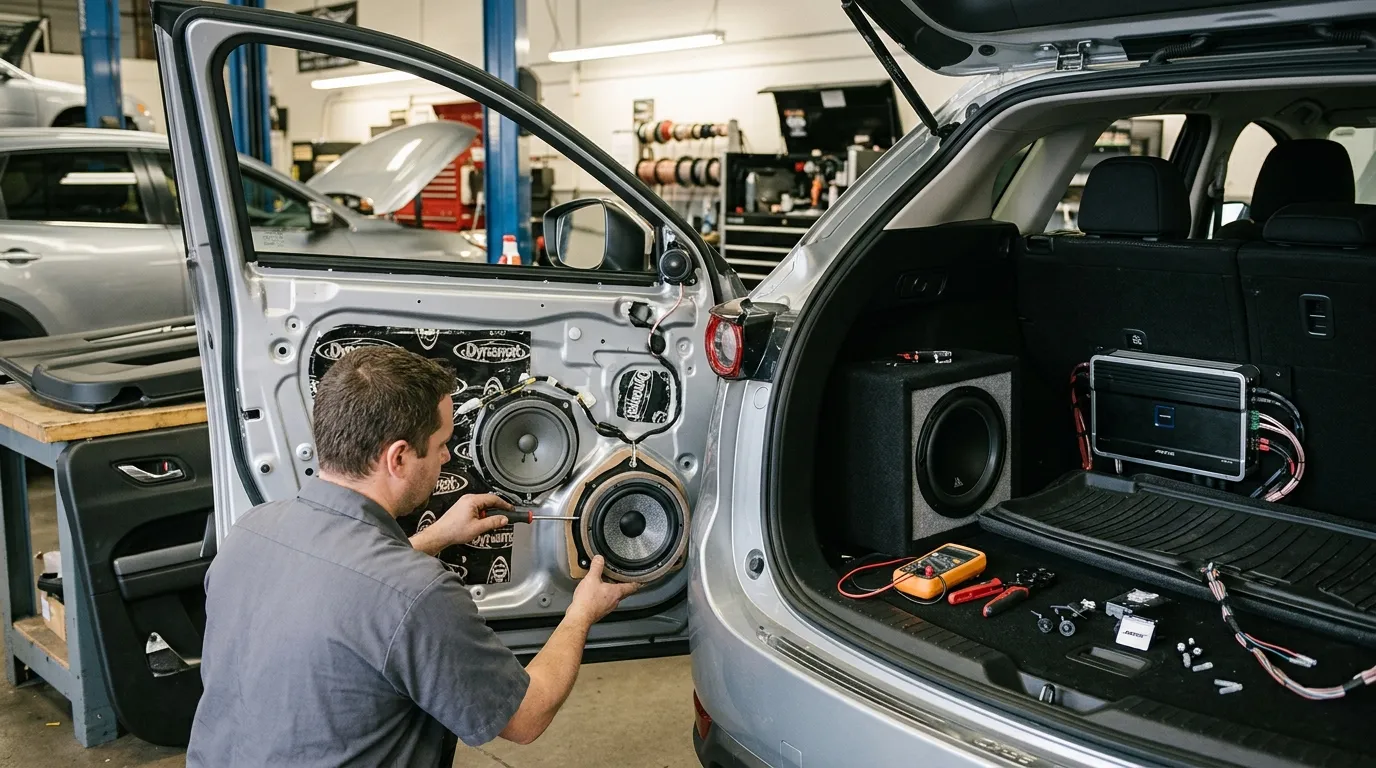
If you replace one part of the system without understanding what the factory equipment is doing, the new part may receive a signal it was never designed to use.
The weak point is not always the same.
Some factory Bose systems have speakers that become the obvious limit once the volume rises.
Others are limited by the amount of amplifier power available.
Some have strong factory equalization that changes the signal before it reaches the speakers.
Older Bose systems may also suffer from worn speakers, damaged surrounds, tired amplifiers, or failing factory subwoofers.
A driver may notice:
The real question is which part is causing the problem.
That is why a proper Bose upgrade starts with inspection rather than assuming the speakers need to go first.
Yes, replacing factory Bose speakers can help, but the result depends on the vehicle.
A quality aftermarket speaker may provide:
Still, there is a catch.
Factory premium systems often use speakers chosen to work with the factory amplifier and factory equalization.
That means an aftermarket speaker with a different impedance or sensitivity may not behave the way you expect when connected to the original Bose amplifier.
Crutchfield notes that amplified factory systems can present technical issues because the amplifier may provide separate frequency bands, unusual equalization, or digitally controlled outputs.
If the factory amplifier sends a heavily processed signal to a replacement speaker, the new speaker cannot restore information that is missing from that signal.
That is why car speaker replacement is only one possible part of a Bose upgrade.
Impedance is one of the first things that should be checked before changing Bose speakers.
Factory premium-audio systems do not always use the same speaker impedance common in aftermarket equipment.
A factory speaker may be designed specifically for the output of the Bose amplifier.
Installing a replacement with a different impedance can change how much power the amplifier delivers.
That can lead to:
A speaker that physically fits the opening is not automatically an electrical match.
That is why a proper factory Bose car audio replacement should begin with vehicle-specific information.
Before buying speakers, check:
This is especially important in newer premium systems with many speakers.
In some vehicles, replacing or bypassing the factory amplifier can make a bigger difference than changing speakers alone.
Crutchfield explains that factory amplifiers can limit aftermarket upgrades because they may send processed, crossed-over, or digitally controlled signals to different speakers.
If the original amplifier stays in place, your new speakers are still being controlled by that amplifier.
A new aftermarket amplifier can provide:
Still, removing a factory Bose amplifier is not always simple.
Some vehicles use the amplifier for functions such as:
Crutchfield points out that some factory amplified systems require an interface device so these functions continue working after an aftermarket amplifier is installed.
That is why car amplifier installation on a Bose-equipped vehicle often involves more than connecting power and speaker wires.
This is one of the biggest reasons a Bose upgrade can become complicated.
Bose says its systems use software and signal processing to shape the sound inside a specific vehicle.
Its automotive technology can include features such as:
These features mean the signal reaching a speaker may already be changed before the speaker plays it.
A factory amplifier may alter:
Crutchfield also notes that some factory systems reduce bass as the volume rises or use equalization designed around the original speakers.
Now here’s the thing.
If you install better speakers but continue feeding them a signal designed to correct the weaknesses of the old factory speakers, the new speakers may never sound the way they should.
That is where a digital signal processor or vehicle-specific interface can become useful.
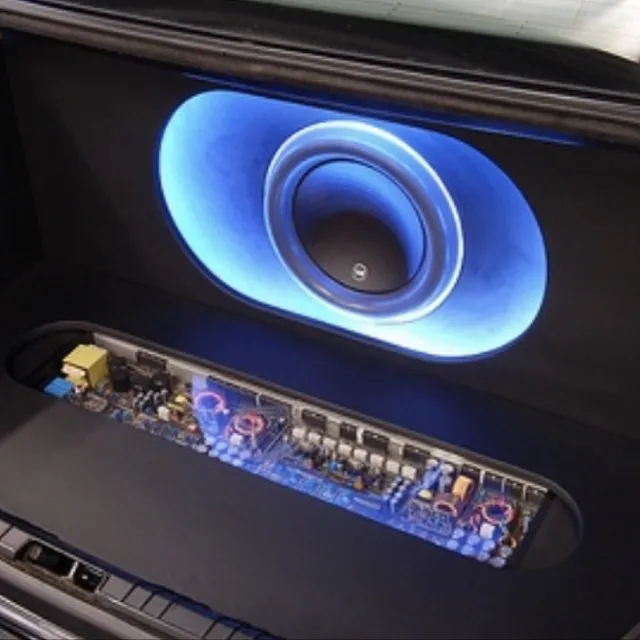
For many drivers, a subwoofer is one of the first Bose upgrades worth considering.
Why?
Because the biggest complaint with many factory systems is not necessarily the vocals or treble. It is the lack of deep, controlled bass.
A dedicated car subwoofer can add low-frequency output without requiring you to remove the factory radio.
The setup may include:
The right method depends on the car.
Crutchfield recommends speaker-level amplifier inputs as one possible way to add bass to a factory stereo.
A more complicated Bose system may need an interface or processor to obtain a usable signal.
Some factory systems reduce bass as volume increases.
This can protect factory speakers, but it can also make an aftermarket subwoofer sound weaker as the system gets louder.
A signal processor or interface designed for factory systems may help correct that behavior.
A professional installer can test the signal before deciding where to connect the subwoofer amplifier.
You do not always need to replace the factory radio.
In many newer vehicles, keeping it is the better path because the screen controls much more than music.
The factory display may handle:
Replacing that unit may be difficult or may require several integration parts.
A properly designed system can keep the original radio while upgrading speakers, amplification, processing, and bass.
That can give the car much better sound while preserving the factory dashboard.
Older vehicles can be different.
If the factory radio is easy to replace and you also want newer features, an aftermarket unit may make sense.
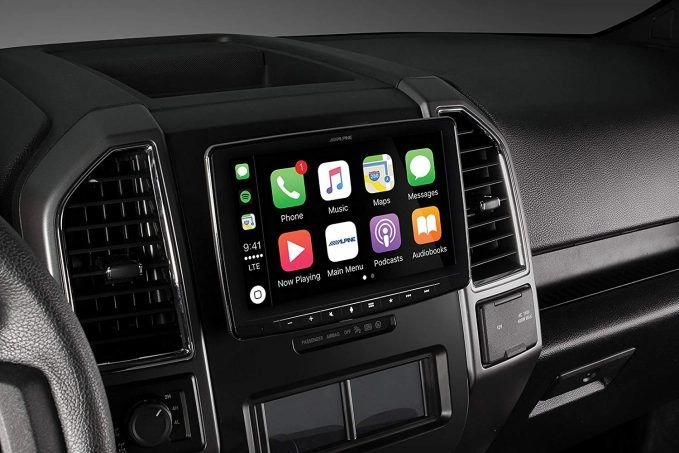
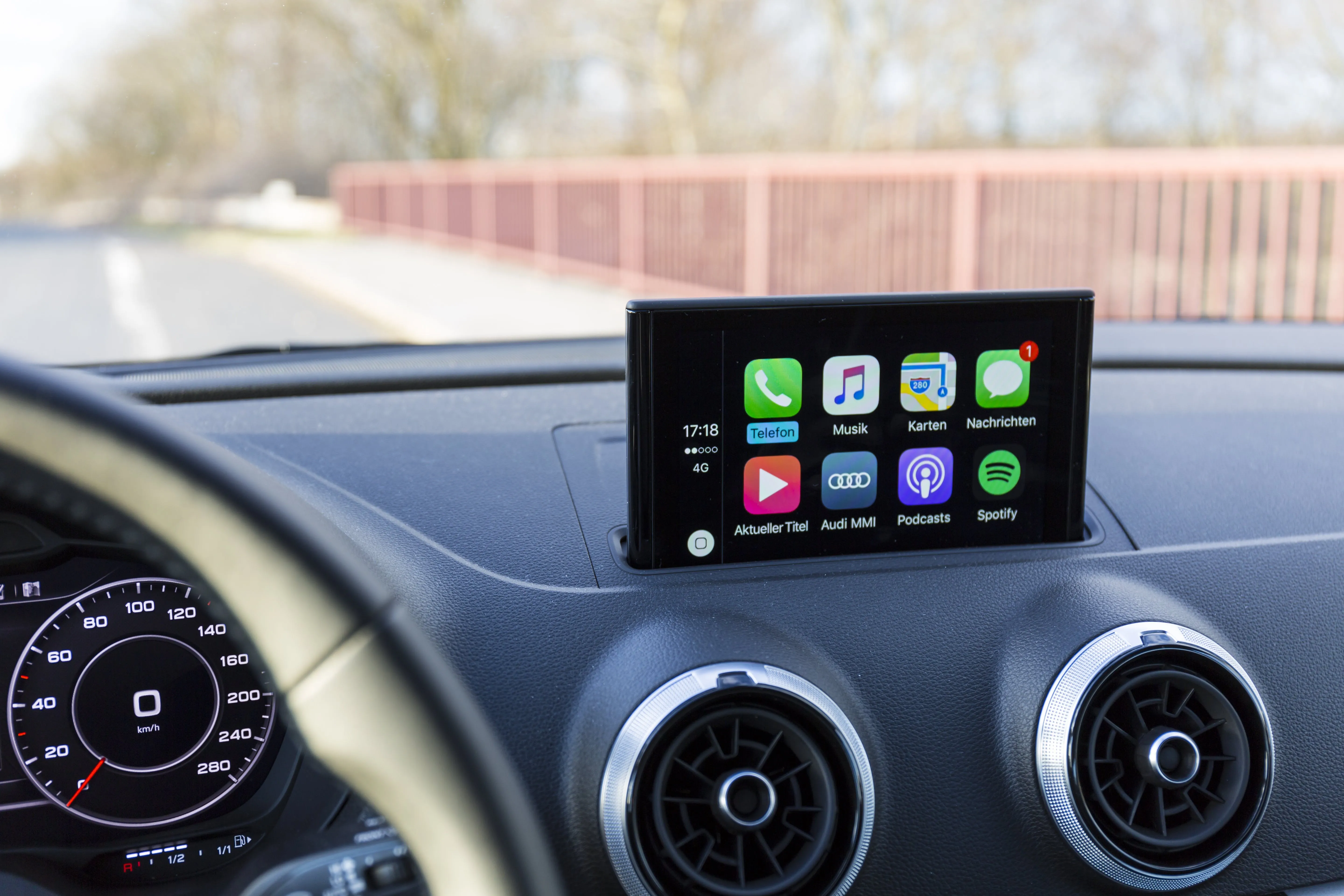
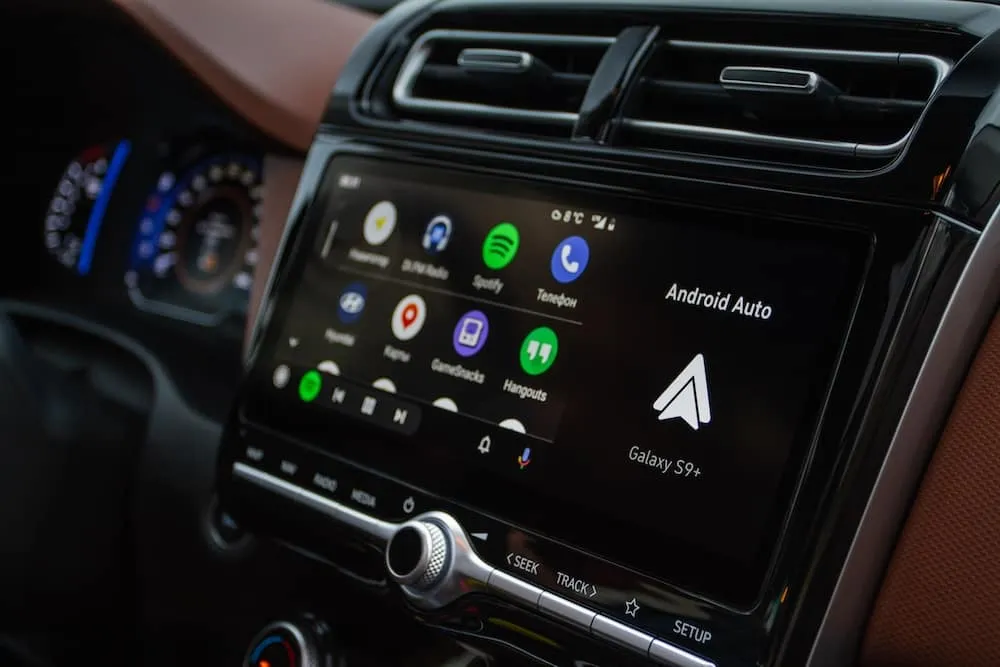
Audio Vision offers Apple CarPlay and Android Auto upgrades for compatible vehicles.
A DSP, short for digital signal processor, can become one of the most useful pieces in a factory Bose upgrade.
A processor can help manage:
A vehicle-specific interface can also provide cleaner access to the factory audio signal.
Crutchfield describes vehicle-specific interfaces as one of the better ways to add aftermarket amplification to premium factory systems because they can provide cleaner, full-range signals while retaining original vehicle functions.
Products in this category can include interfaces from companies such as PAC, Axxess, iDatalink, and others depending on the vehicle.
One example is an Axxess interface for select GM vehicles with Bose systems that provides multiple preamp outputs and retains features such as chimes and OnStar.
That does not mean every Bose vehicle needs a DSP.
A simple older system may be easier to bypass.
A newer digitally controlled system may benefit greatly from an interface.
The vehicle determines the answer.
There is more than one smart way to upgrade.
This works well when the amplifier is functioning properly and the main problem is damaged or weak speakers.
This may be enough for a driver who wants cleaner sound without rebuilding the entire system.
This is often a good choice when the factory system sounds acceptable but lacks low-end impact.
A subwoofer can make a large audible difference while leaving most of the Bose system intact.
This works for drivers who want noticeably more output and cleaner sound.
The factory signal may need to be corrected or interfaced before reaching the new amplifier.
This becomes attractive when the factory amplifier is limiting the system or heavily processing the signal.
A compatible interface may be needed to retain vehicle functions.
A larger factory Bose car audio replacement might include:
This makes sense when the owner wants a major change rather than a mild improvement.
Some upgrade approaches cause disappointment more often than others.
A 6.5-inch factory speaker and a 6.5-inch aftermarket speaker can still be very different electrically.
Impedance and factory signal routing matter.
The amplifier may send different frequency bands to different locations.
You need to know what each speaker is receiving.
A newer Bose system may not provide a normal full-range analog signal.
Using the wrong signal source can create uneven frequency response or missing information.
Some premium systems route vehicle sounds through the amplifier.
Bypassing the system incorrectly may affect those sounds.
A factory system with many speakers can still be limited by processing, power, speaker quality, or tuning.
Adding even more speakers does not automatically fix those problems.
Start with what bothers you.
Start by looking at a subwoofer upgrade.
Inspect the speakers and determine whether they are damaged or simply being pushed beyond what they can handle.
Look at amplifier power and factory signal processing.
Speaker quality, equalization, and factory tuning may all be involved.
The factory system may be using limiting, equalization changes, or bass reduction.
Plan the speakers, amplifier, DSP or interface, subwoofer, and electrical needs together.
Bottom line, do not replace parts blindly.
A vehicle-specific plan usually produces a better result than buying equipment one piece at a time.
Audio Vision works with premium factory systems for drivers in Montclair, CA and surrounding Inland Empire communities.
A Bose upgrade may be as simple as replacing weak speakers.
It may also involve a complete system with amplification, signal processing, and new bass equipment.
Audio Vision offers:
You can also visit Audio Vision’s Bose car audio brand page when researching factory Bose replacement or upgrade choices.
Audio Vision is located at:
Audio Vision
5521 Holt Blvd
Montclair, CA 91763
Phone: (909) 983-4500
Hours: Monday through Sunday, 9:00 AM to 7:00 PM
The shop serves customers from Montclair, CA, Ontario, CA, Pomona, CA, Rancho Cucamonga, CA, Chino, CA, Chino Hills, CA, Claremont, CA, and nearby communities.
Call (909) 983-4500 or contact Audio Vision online to discuss your vehicle’s Bose system and the changes you want to hear.
It can be. Aftermarket speakers may improve clarity, output, midbass, and power handling. The factory amplifier and signal processing still affect how those speakers perform, so the entire Bose system should be evaluated before choosing replacements.
Sometimes. The replacement speakers need to be compatible with the factory amplifier’s output, impedance requirements, and frequency range. Some Bose systems work well with a speaker-only upgrade, while others benefit more from replacing or bypassing the amplifier.
A factory Bose amplifier may send processed or frequency-limited signals designed around the original speakers. If the replacement speaker has a different impedance, sensitivity, or frequency response, the system may sound quieter or unbalanced.
Yes. Many Bose-equipped vehicles can accept an aftermarket subwoofer while keeping the factory radio. The installer may use speaker-level inputs, a line output converter, DSP, or a vehicle-specific interface depending on the vehicle.
Not necessarily. Many factory radios can stay in place while the speakers, amplifier, signal processing, and subwoofer are upgraded. Keeping the factory radio may also preserve vehicle settings, cameras, navigation, and other original functions.
It depends on what the current system lacks. A subwoofer often makes the biggest difference when bass is weak. New speakers and amplification may help more when clarity and volume are the problem. A DSP or interface can become the most important piece when factory processing is limiting the rest of the system.
Audio Vision is located at 5521 Holt Blvd, Montclair, CA 91763 and works with factory premium-audio systems. Call (909) 983-4500 or use the Audio Vision contact page to discuss speakers, amplifiers, subwoofers, integration, and Bose system upgrades.
Looking for the best car audio installation in Montclair, CA? Discover expert tips, top brands, and why Audio Vision is the go-to destination for high-quality car sound systems.
Product Brand: Audio Vision
Product Currency: USD
Product Price: 299
Product In-Stock: InStock

Acima, a flexible lease-to-own option that helps you get the car upgrades you love—without needing perfect credit. Whether you’re looking for car audio, video, security systems, window tint, wheels, auto lighting, or accessories, Acima makes it easy with no credit needed and convenient payment options. Get what you want today and pay over time, hassle-free!

Snap Finance is here to help you get the car audio, video, security, window tint, wheels, lighting, and accessories you need today. With Snap Finance, you can shop now and pay later, thanks to their flexible payment plans that consider more than just your credit score. Applying is fast and easy, and you’ll receive a decision in seconds. Take advantage of stress-free payment options that fit your payday schedule, so you can upgrade your ride without the wait!
Explore the many services we offer by clicking the boxes below


|
|
|
|
|
|
|
|
|
|
|
|
|
|
|
|
Replacing a Factory Bose Car Audio System: What Actually Improves
|
Replacing a Factory Bose Car Audio System: What Actually Improves
|
Replacing a Factory Bose Car Audio System: What Actually Improves
|
Replacing a Factory Bose Car Audio System: What Actually Improves
|
|
|
|
|
|
|
|
|
|
|
|
|
|
|
|
|
|
|
|
|
|
|
|
|
|
|