
Looking for the best car audio installation in Montclair, CA? Discover expert tips, top brands, and why Audio Vision is the go-to destination for high-quality car sound systems.
Product Brand: Audio Vision
Product Currency: USD
Product Price: 299
Product In-Stock: InStock
LED lighting installation in Riverside, CA is a popular upgrade for vehicle owners who want better-looking lights, clearer interior illumination, or a more modern appearance. Whether you’re interested in LED headlights, fog lights, or custom interior lighting, choosing the right equipment matters just as much as the finished look.
Maybe your factory headlights seem dim on unfamiliar roads. Perhaps you want fog lights that provide a useful beam during poor weather. Or you might be interested in subtle LED lighting around the dashboard, footwells, and door panels.
These upgrades can change your vehicle’s appearance and functionality.
But there’s something important to understand before buying LED lights.
Not every LED bulb is suitable or legal for every vehicle.
A headlight designed for a halogen bulb doesn’t automatically become a compliant LED headlight when you install an aftermarket LED bulb. The complete lighting system must meet applicable safety requirements, and a poorly matched bulb can create glare without improving your view of the road.
Fog lights have their own mounting and aiming rules. Interior lighting also needs careful placement so it doesn’t distract the driver or create unwanted reflections.
At Audio Vision, we’ve served Southern California vehicle owners since 2006. Our shop is located at 5521 Holt Blvd, Montclair, CA 91763, where we offer automotive LED lighting services for customers throughout the Inland Empire.
We welcome customers from Riverside, CA, Corona, CA, Moreno Valley, CA, Jurupa Valley, CA, and surrounding communities.
This guide explains the different types of vehicle LED lighting, what to look for before installation, which California rules apply, and how to plan a lighting upgrade that suits your car.
LED stands for light-emitting diode.
Unlike a traditional incandescent or halogen bulb, an LED produces light through a semiconductor.
LED technology is used in vehicle headlights, taillights, daytime running lights, interior lamps, instrument displays, and many other automotive applications.
According to the U.S. Department of Energy’s LED Basics guide, LEDs can provide high energy performance, directional light output, and long operating life when the product is properly designed.
Those characteristics help explain why automakers use LED technology in so many modern vehicles.
Depending on the product and application, LED lighting may offer:
But these benefits are not guaranteed for every aftermarket product.
A poorly made LED lamp may fail prematurely, flicker, produce excessive glare, or work incorrectly with the vehicle’s electrical system.
A lighting upgrade should do more than turn on.
Exterior lamps need the correct beam, color, mounting, and electrical connections.
Interior lights need secure wiring and placement that won’t distract the driver.
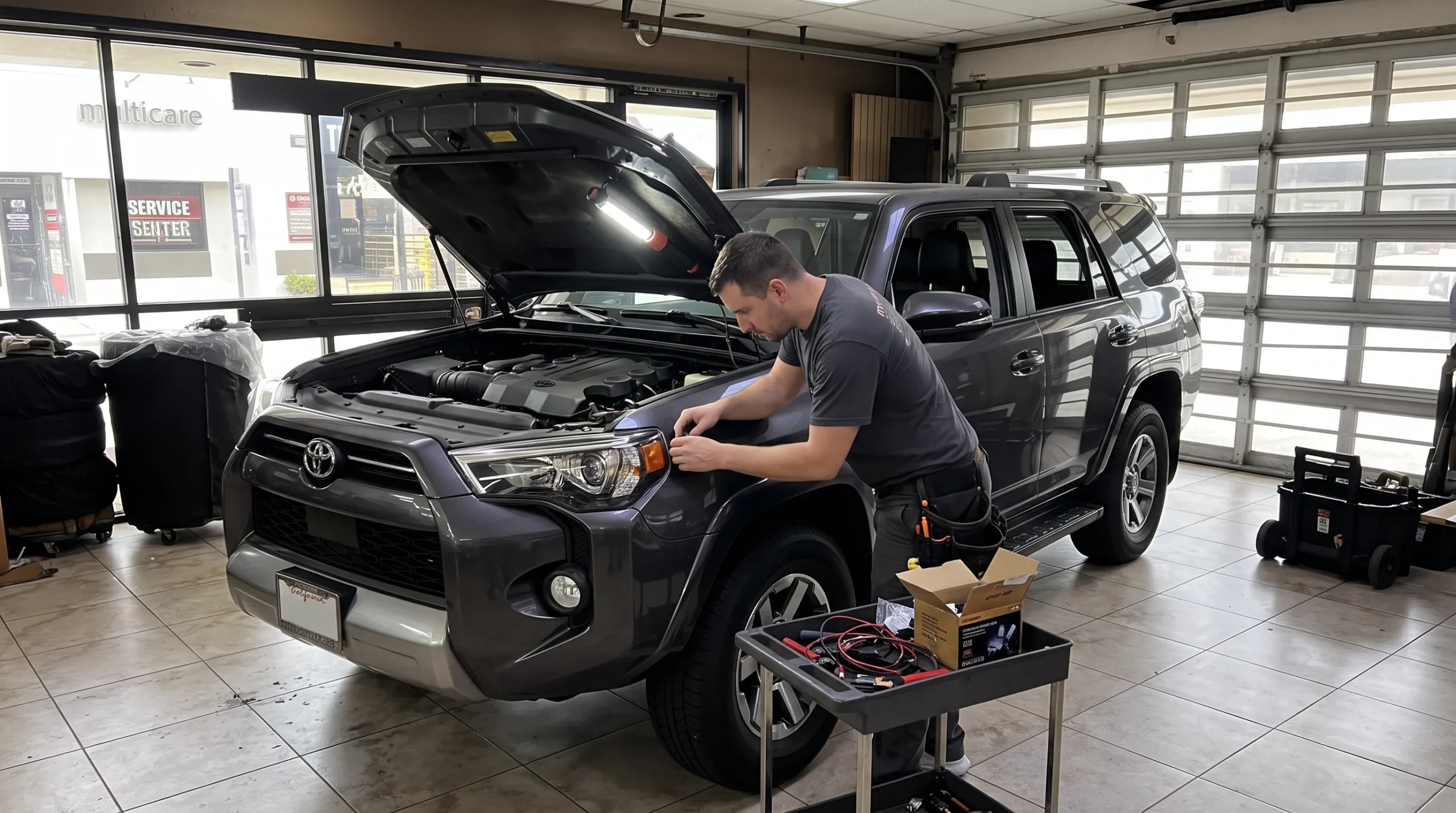
The best starting point is identifying what your vehicle already has and choosing a suitable product for that application.
These lighting categories serve different purposes.
A product designed for interior decoration isn’t suitable for use as a headlight. Likewise, a headlight assembly isn’t interchangeable with a fog lamp.
| Lighting type | Main purpose | Important considerations |
|---|---|---|
| LED headlights | Illuminate the road ahead | Headlamp compliance, beam pattern, aim and vehicle compatibility |
| LED fog lights | Provide a low-mounted auxiliary beam | Approved lamp design, mounting height, aim and color |
| Interior dome LEDs | Illuminate the passenger cabin | Bulb compatibility and factory controls |
| Footwell LEDs | Light selected cabin areas | Placement, brightness and distraction |
| Dashboard accent LEDs | Add subtle interior illumination | Reflections, wiring and brightness control |
| Door accent LEDs | Illuminate selected interior trim | Safe cable routing and moving door components |
| Underbody or exterior accents | Decorative exterior lighting | California equipment and color restrictions |
Before choosing a system, decide whether your goal is better functional lighting, a change in appearance, or both.
This will help determine which equipment deserves attention first.
Headlight upgrades are one of the most common reasons people research LED lighting installation in Riverside, CA.
If your headlights seem weak, it’s natural to look for something brighter.
But brightness alone doesn’t determine how well a headlight works.
The headlamp must project the light where it’s needed while limiting glare for other road users.
1. Light source
The type and performance of the light source matter.
Halogen, HID, and LED systems use different technologies.
2. Headlamp optics
The lens, reflector, or projector controls where the light goes.
These parts are designed around particular light-source characteristics.
3. Headlamp aim
The complete assembly must be aimed correctly.
Even a properly designed headlight can create problems when it’s aimed too high.
Many newer vehicles leave the manufacturer with LED headlamps.
These systems are designed as complete lighting assemblies.
They may contain integrated LEDs, electronic control modules, and specialized cooling equipment.
If a factory LED headlamp fails, the repair may involve a serviceable module or replacement assembly, depending on the vehicle.
It doesn’t necessarily use an ordinary replaceable bulb.
Yes, some manufacturers produce complete LED headlamp assemblies for selected vehicles.
But the assembly needs to meet applicable federal requirements and be suitable for the vehicle.
Don’t assume a product is road-legal simply because its seller advertises it for a particular car.
Ask for evidence that the complete headlamp assembly meets applicable requirements before installation.
This is an important question, especially for older vehicles.
You may find aftermarket LED replacement bulbs advertised as a direct replacement for a halogen bulb.
Some use the same general connector or bulb-base shape.
But physical fit is not the same as legal or optical compatibility.
In a February 13, 2024 interpretation of Federal Motor Vehicle Safety Standard No. 108, the National Highway Traffic Safety Administration explained that LED sources are permitted in compliant integral-beam headlamp assemblies.
The agency also explained that LED replacement light sources were not permitted for replaceable-bulb headlamps under the federal standard at the time of its interpretation.
That means a replacement LED bulb advertised as fitting a halogen headlamp socket should not automatically be considered a compliant road-use conversion.
A halogen headlight’s reflector or projector is designed for a particular light-source geometry.
An LED replacement may position its light-producing surfaces differently from the original filament.
That can change the distribution of light.
The result may include:
If your goal is improving an older vehicle’s headlights, begin by having the existing lights inspected.
The problem may involve cloudy lenses, poor adjustment, electrical faults, or aging components.
A suitable replacement halogen bulb or a complete compliant headlamp assembly may be the proper solution.
For LED lighting installation in Riverside, CA, discuss the vehicle’s original headlamp type with Audio Vision before buying conversion equipment.
Some LED products advertise very high lumen figures.
That number may sound impressive, but it doesn’t tell you how much useful light reaches the road.
Lumens describe light output from a source.
Headlight performance depends on how the complete assembly distributes light across the road and surrounding areas.
Federal headlamp standards include measurements of light intensity at different locations in the beam.
These requirements help balance forward visibility and glare control.
Glare occurs when unwanted light reaches another person’s eyes.
A headlamp aimed too high or producing the wrong beam pattern may make it harder for oncoming motorists to see.
NHTSA has identified misaimed headlamps and improperly installed auxiliary lamps as potential contributors to glare complaints.
A brighter-looking headlight isn’t necessarily safer.
For an appropriate headlight service, ask about:
If an installer recommends an LED headlight change, they should explain why the specific equipment is suitable for road use.
Fog lights serve a different purpose from headlights.
They’re typically mounted lower on the vehicle and designed to spread light across a relatively wide, low area in front of the car.
A suitable fog lamp can be useful in certain low-visibility conditions.
But fog lights aren’t a substitute for headlights.
A headlight is the vehicle’s main forward lighting system.
A fog lamp is auxiliary lighting intended for particular visibility conditions.
The beam patterns are different.
A fog lamp shouldn’t be selected or mounted simply because it looks bright.
Under California Vehicle Code Section 24403, a motor vehicle may have no more than two fog lamps.
For cars and other non-motorcycle vehicles, the statute specifies a mounting height from 12 to 30 inches and particular aiming requirements.
It also says fog lamps may be used with, but not instead of, headlights.
These rules affect which mounting positions and products are suitable.
Possibly.
The vehicle must have a suitable mounting arrangement and a system that meets applicable equipment rules.
Adding fog lights may require appropriate brackets, wiring, switching, and electrical protection.
The installation should not interfere with other vehicle components.
Not without checking compatibility and legal requirements.
The original fog lamp may have been designed around a specific bulb.
Replacing that light source can alter its beam pattern.
A properly designed complete LED fog lamp may be another option, subject to compatibility and compliance.
Audio Vision offers car LED lighting services for customers considering exterior lighting upgrades.
White and yellow are common fog light colors.
Both can be permitted in California when the complete fog lamp meets applicable requirements.
But color alone doesn’t determine whether a fog lamp is effective.
White fog lamps provide a neutral appearance that can match certain factory headlights.
They’re common on modern vehicles.
The quality of the beam and aiming matter more than whether the light looks especially bright.
Yellow fog lamps have a distinct appearance.
Some vehicle owners prefer them for fog light applications or to contrast with white headlights.
But a yellow lamp isn’t automatically better in every weather condition.
Its beam pattern, mounting position, and light distribution still matter.
California Vehicle Code Section 25950 permits fog lamp colors within the spectrum from white to yellow.
The statute also places color restrictions on other lamps visible from the front and rear of a vehicle.
That means blue, green, or multicolor fog lamps should not be treated as ordinary road-legal fog lighting.
For street use, ask about a compliant white or yellow fog lamp rather than choosing based on appearance alone.
Not every lighting upgrade involves headlights.
Interior LEDs are popular with car enthusiasts who want a cleaner cabin appearance or more useful lighting in selected areas.
Unlike exterior headlights, interior lighting usually doesn’t require a beam aimed down the road.
But the installation still needs to consider vehicle electronics, visibility, and safety.
A dome light illuminates the passenger compartment.
In compatible vehicles, an LED replacement may provide a different light appearance from the factory bulb.
The replacement needs the correct electrical specifications and fitment.
Some modern vehicles already have integrated LED interior lamps that are not designed for ordinary bulb replacement.
Map lights provide localized cabin illumination.
These lights may be useful for reading or finding small objects while parked.
A suitable replacement should preserve the original lamp’s normal controls.
Footwell lights illuminate areas near the front or rear passengers’ feet.
They may be installed as part of a compatible interior illumination system.
Placement should keep wiring away from pedals, seat tracks, and other moving parts.
Certain vehicles support accent lighting around door trim or storage areas.
These installations require care because door panels contain wiring and mechanical components.
The light strips and wiring must not interfere with window operation, door latches, or safety equipment.
Some owners want a narrow illuminated strip along suitable dashboard trim.
This type of lighting needs careful placement to avoid reflections on the windshield.
Brightness controls and a suitable shutoff option are worth discussing.
Audio Vision features car LED lighting and also has an ambient interior lighting service page for Riverside customers.
Ask which interior lighting configurations are suitable for your vehicle.
Some interior lighting products offer adjustable colors or brightness.
That can appeal to customers who want the cabin to look different at night.
But there are limits to what should be installed or operated while a vehicle is moving.
A single-color system uses one selected light color.
It may be suitable for a specific cabin illumination function when installed within applicable rules.
Certain LED systems support multiple colors.
The control method depends on the product.
Some use a wired controller, while others support compatible smartphone control.
Not every system has the same features.
An illuminated strip that looks attractive while parked might create distracting reflections at night.
Light reflecting on the windshield or side windows can interfere with the driver’s view.
A suitable installation should provide appropriate brightness control or a way to turn the lighting off.
Some products change color or pulse in response to music.
These effects may be entertaining in a parked vehicle or at a show.
They can be distracting on public roads.
Discuss a setup that can be disabled while the vehicle is moving.
Avoid placing lighting strips, controllers, or wiring where they can interfere with:
Interior lighting should complement the cabin without getting in the way of its normal operation.
California lighting rules deserve attention before modifying a vehicle.
A product being sold online doesn’t automatically make it legal for street use.
And different rules apply to different types of lamps.
Federal Motor Vehicle Safety Standard No. 108 covers vehicle lighting equipment, including original and replacement headlamp assemblies.
NHTSA’s 2024 LED headlamp interpretation explains the distinction between compliant integral LED headlamps and LED bulbs substituted into replaceable-bulb headlamps.
For an aftermarket project, compliance must be checked for the actual assembly and vehicle application.
Vehicle Code Section 25950 establishes general color requirements for lamps and reflectors.
Under the statute, lights visible from the front generally must be white or yellow unless a stated exception applies.
Lights visible from the rear are generally red, with exceptions for certain equipment such as turn signals and backup lamps.
It’s not safe to assume that any decorative headlight color is allowed.
Vehicle Code Section 24403 limits the number, mounting position, and aim of fog lamps.
Those requirements apply regardless of whether the lamp uses LED or another light source.
Interior lighting isn’t completely unrestricted.
California Vehicle Code Section 24003 generally restricts unpermitted vehicle lighting and expressly exempts certain interior lamps designed and used to illuminate the cabin, including map, dash, door, and dome lamps.
A decorative LED strip is not automatically exempt just because it is mounted inside the vehicle.
Whether a particular installation is allowed can depend on its design, purpose, visibility, and other applicable rules.
Before installing custom lighting:
If the legality of a proposed setup is unclear, confirm the rules before having it installed.
LED isn’t the only lighting technology used in cars.
Many vehicles use halogen or high-intensity discharge systems.
Each technology works differently.
Halogen bulbs use a heated filament to produce light.
They’re found in many older and entry-level vehicle lighting systems.
When a halogen headlamp needs a new bulb, using the correct specified replacement maintains the original light-source design.
HID stands for high-intensity discharge.
These systems produce light through an electrical discharge rather than a filament.
Factory HID systems use suitable lamps, electronics, and headlamp optics.
They aren’t the same thing as LED headlights.
Audio Vision also offers car HID lighting services.
LED systems use semiconductor light sources.
A complete LED headlamp can be designed around its LEDs and optical components.
The distinction between a complete LED assembly and an LED bulb inserted into a halogen lamp is important for both performance and compliance.
| Technology | How it produces light | Common consideration |
|---|---|---|
| Halogen | Heated filament | Correct bulb specification and headlamp condition |
| HID | Electrical discharge | Compatible electronics, optics and lamp type |
| LED | Semiconductor light source | Complete assembly design, cooling and compatibility |
No technology should be judged solely by color or advertised brightness.
The complete lighting system determines the result.
Professional LED lighting installation in Riverside, CA starts with reviewing the vehicle and the customer’s goals.
For customers visiting Audio Vision, that consultation takes place through our Montclair location.
The process will differ depending on whether you’re discussing a headlamp assembly, fog lights, or interior illumination.
The installer identifies your vehicle’s year, make, model, and trim.
They also check the original lighting arrangement.
This helps determine which options may fit.
Are you trying to correct poor headlight performance?
Do you want a compatible fog lamp?
Would you prefer subtle interior illumination?
The answer affects the equipment and installation requirements.
Exterior lighting requires particular attention to the product’s intended use.
The installer should review applicable road-use requirements rather than relying only on the physical fit of a bulb or assembly.
Interior lighting needs a separate review of placement and controls.
Modern vehicle lighting may be controlled by electronic modules rather than simple switches.
Wiring should follow appropriate manufacturer procedures.
Suitable circuit protection, connectors, and secure cable routing matter.
The installer fits the approved equipment and secures its connections.
Depending on the project, this may involve removing trim panels or accessing factory mounting locations.
The work should avoid interference with vehicle safety systems and moving components.
The final inspection may include:
For a custom interior lighting system, the installer should show you how to operate it and switch it off.
For exterior lighting, ask about ongoing inspection and maintenance.
LED technology can offer useful features, but installation problems sometimes occur.
A light that turns on briefly and then stops working isn’t necessarily defective.
Flickering may result from an incompatible electrical system, incorrect connections, or the lighting product’s electronics.
Some vehicles monitor lamp circuits in ways that affect aftermarket equipment.
The cause should be identified before adding components to the circuit.
Certain vehicles detect changes in lamp operation or electrical load.
An incompatible product may trigger a lamp warning.
Don’t simply ignore the warning or assume it can be safely bypassed.
Damaged seals or an improperly fitted assembly can allow moisture to enter.
Persistent water intrusion can damage electrical components.
An unsuitable light source or incorrectly positioned assembly can create a distorted beam.
This matters most for headlights and fog lamps.
A lighting setup that produces excessive glare should be corrected before road use.
Some vehicle interior circuits use electronic switching or gradual dimming.
A lighting product connected incorrectly may remain illuminated or behave unexpectedly.
LEDs can be energy-saving light sources, but their electronic components still produce heat.
Heat needs to be managed through the product’s design.
The Department of Energy notes that LED product reliability depends on the complete system, including its electronics.
A lamp that’s overheating deserves professional attention.
Before buying LED equipment, think about how you want to use it.
A lighting project should begin with a clear purpose.
Have the original lights checked first.
The problem may be a worn bulb, damaged lens, poor aim, or electrical fault.
Ask about a suitable repair or compliant replacement headlamp assembly.
Ask about complete compatible fog lamps that meet applicable rules.
Confirm the mounting location and aiming requirements.
Discuss interior lighting that provides the look you want without creating reflections or distracting the driver.
Brightness control is useful.
Plan the electrical installation as one project.
That allows the installer to review the wiring requirements and controls together.
Bring these questions to your consultation.
A suitable product should meet your goals without creating problems elsewhere in the vehicle.
If you’re looking for LED lighting installation in Riverside, CA, Audio Vision offers automotive lighting services through our shop in Montclair, CA.
Our physical storefront is in Montclair, CA, not Riverside, CA.
We welcome Riverside-area customers interested in discussing compatible lighting upgrades.
Riverside vehicle owners can contact Audio Vision about headlight concerns, fog lamp options, and interior LED lighting.
Our Riverside LED and HID lighting service page provides more information about local service availability.
Customers from Corona, CA may be considering better functional lighting or a new interior appearance.
If you’re interested in exterior lighting, share the original lamp type so compatibility can be reviewed.
Vehicle owners from Moreno Valley, CA can contact our Montclair shop about LED lighting services.
Whether you own a sedan, truck, or SUV, the available options depend on the vehicle and intended use.
If you’re interested in illuminated cabin areas, discuss the placement and brightness of the lights before installation.
Customers from Jurupa Valley, CA can ask about suitable interior lighting configurations.
Audio Vision also welcomes customers from Norco, CA and Ontario, CA.
We serve other Inland Empire communities, including Rancho Cucamonga, CA, Chino, CA, and Fontana, CA.
Call before visiting to discuss the type of lighting you’d like installed and the next available appointment.
Audio Vision has served Inland Empire car owners since 2006.
Our business offers automotive electronics and customization services, including LED lighting for compatible vehicles.
Our car LED lighting service includes exterior lighting options.
Customers can discuss headlamp concerns, lighting compatibility, and suitable replacement equipment.
For street-use applications, the selected equipment must meet applicable requirements.
Audio Vision can discuss compatible fog light equipment and installation options for supported vehicles.
Mounting, aiming, and compliance should be part of the plan.
Interior lighting can change the appearance of the cabin.
Ask about dome light replacements, selected interior accents, and brightness controls suited to your vehicle.
If your vehicle has an HID lighting system, Audio Vision also offers car HID services.
HID and LED equipment are different technologies and should not be treated as interchangeable.
Different cars use different lighting controls and electrical connections.
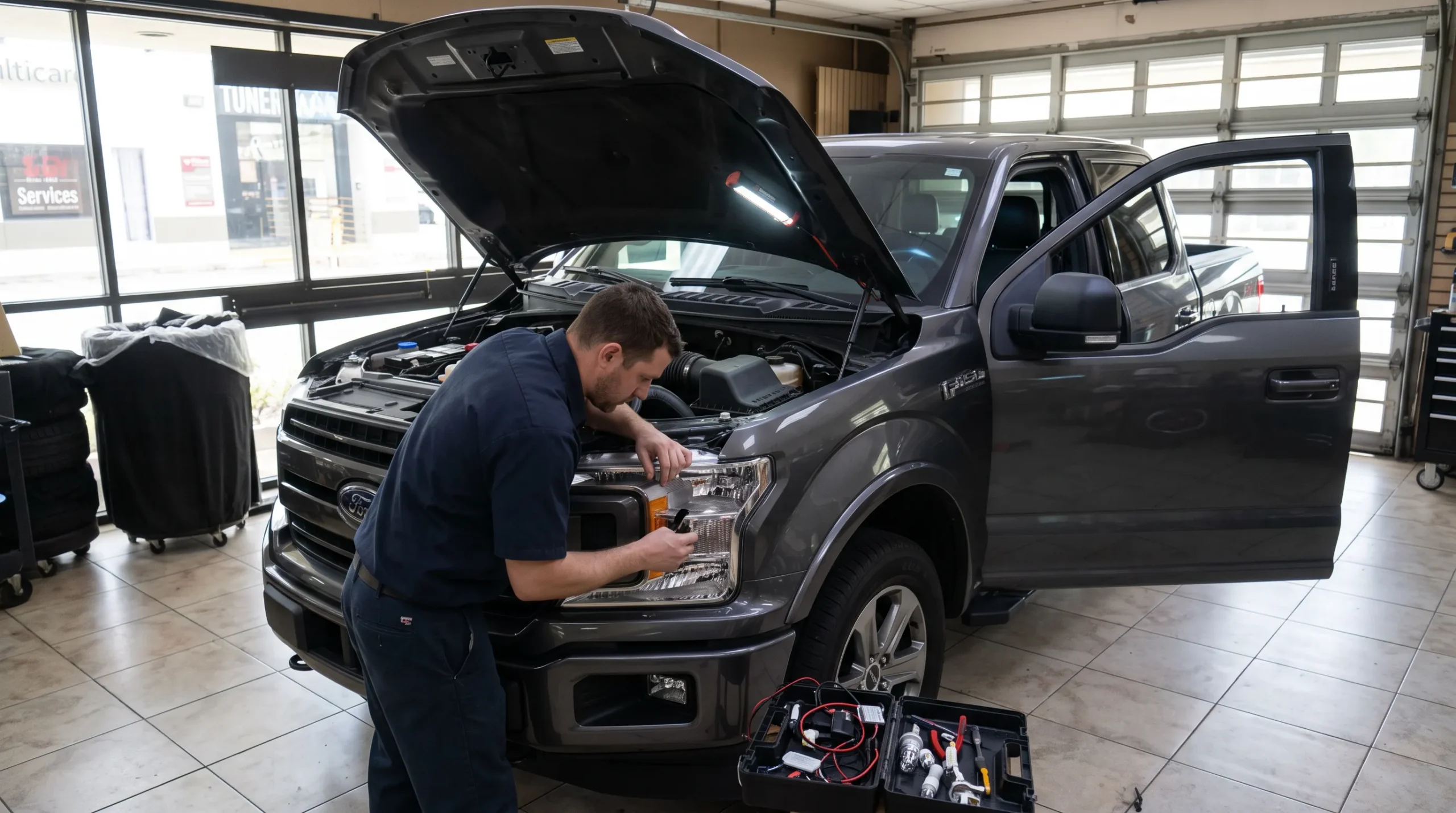
A suitable plan starts with the correct vehicle information and a clear explanation of the lighting changes you want.
Audio Vision offers automotive LED lighting services from 5521 Holt Blvd, Montclair, CA 91763. The shop welcomes customers from Riverside, CA, Corona, CA, Moreno Valley, CA, Jurupa Valley, CA, Norco, CA, and surrounding Inland Empire communities. Customers can discuss headlights, fog lights, and compatible interior LED upgrades. Call (909) 983-4500 or visit the Audio Vision contact page to schedule a consultation.
LED headlights can be legal when the complete lighting equipment meets applicable federal and state requirements. Factory LED headlamps and suitable compliant replacement assemblies are different from aftermarket LED bulbs inserted into headlights designed for halogen bulbs. NHTSA’s February 13, 2024 interpretation explains that LED replacement light sources were not permitted for replaceable-bulb headlamps under FMVSS No. 108 at that time. Check the compliance of the exact equipment before installation.
You shouldn’t assume an LED bulb is a compliant replacement simply because it fits the original halogen socket. The headlamp’s reflector or projector was designed around a particular light source. Substituting another source may change the beam pattern and produce glare. Federal guidance also distinguishes compliant LED headlamp assemblies from nonconforming LED replacement bulbs. Have the existing lights inspected and ask about suitable street-use options for your vehicle.
California Vehicle Code Section 25950 allows fog lamps to emit colors within the white-to-yellow spectrum. But color is only part of compliance. Section 24403 also places restrictions on the number of fog lamps, their mounting height, their aim, and how they’re used with headlights. A yellow fog lamp that is mounted incorrectly or lacks the proper beam pattern may still be unsuitable for road use.
Some interior lighting is permitted in California, including lamps designed and used for normal cabin illumination. But decorative interior LEDs are not automatically legal in every location or configuration. California Vehicle Code Section 24003 places restrictions on lighting equipment and provides specific exceptions for certain interior lamps. Avoid installations that distract the driver or reflect onto the windshield. Discuss the intended design and use before installation.
Flickering and lamp warnings can result from electrical incompatibility, poor connections, unsuitable control electronics, or faults in the vehicle’s lighting system. Some newer vehicles monitor lamp circuits electronically. Installing a product with different electrical characteristics may cause unexpected behavior. A technician should check the vehicle and lighting equipment before recommending additional components or changing the wiring.
Installation time depends on the project and vehicle. Replacing a serviceable interior lamp may involve less work than adding several footwell lights or replacing an exterior lamp assembly. Wiring access, mounting requirements, and compatibility checks can affect the appointment. Audio Vision’s LED service information says many standard projects may be completed within a few hours, but the exact time varies. Call (909) 983-4500 to discuss scheduling.
The right lighting can make your vehicle more enjoyable to use and give it a different appearance.
But a successful upgrade isn’t just about choosing the brightest LED or the most colorful interior strip.
Headlights need a suitable beam pattern and compliant equipment.
Fog lights need proper placement and aiming.
Interior LEDs need safe electrical connections and thoughtful positioning.
If you’re researching LED lighting installation in Riverside, CA, Audio Vision is available to discuss the options for your car, truck, or SUV.
We’ve served the Inland Empire since 2006 and provide vehicle electronics and lighting services from our Montclair shop.
Business Name: Audio Vision
Address: 5521 Holt Blvd, Montclair, CA 91763
Phone: (909) 983-4500
Business Hours: Monday through Sunday, 9:00 AM to 7:00 PM
Website: https://audiovisionie.com
LED Lighting Services: Explore Car LED Installation
Riverside Lighting Services: View LED and HID Lighting in Riverside, CA
Interior Lighting: Explore Ambient Lighting Options
HID Lighting: Learn About Car HID Services
Ready to discuss new lighting for your vehicle?
Call (909) 983-4500 or visit our Contact Us page to schedule an appointment.
Tell us your vehicle’s year, make, model, and trim level.
Let us know whether you’re interested in headlights, fog lights, dome lights, footwell illumination, or another interior LED application.
Our team can discuss compatible products, installation requirements, applicable lighting restrictions, and the next steps for your project.
The following government, automotive safety, lighting technology, and business resources support the technical, legal, and service information in this article.
Publisher: National Highway Traffic Safety Administration, U.S. Department of Transportation
Publication Date: February 13, 2024
URL: https://www.nhtsa.gov/interpretations/571108-ncc-230201-001-led-headlights-m-baker
Official federal interpretation explaining the distinction between integral LED headlamp assemblies and LED replacement sources installed in replaceable-bulb headlamps.
Publisher: National Highway Traffic Safety Administration; Electronic Code of Federal Regulations
Publication Date: Current regulation; original standard and amendments published separately
URL: https://www.ecfr.gov/current/title-49/subtitle-B/chapter-V/part-571/subpart-B/section-571.108
Federal requirements for motor vehicle lighting equipment, including headlamp performance, lamp color, and other lighting specifications.
Publisher: California Legislature; 2025 statutory text reproduced by Justia
Publication Date: 2025 code edition
URL: https://law.justia.com/codes/california/code-veh/division-12/chapter-2/article-15/section-25950/
California rules concerning vehicle lamp colors, including forward-facing lamps, rear-facing lamps, and permitted fog lamp colors.
Publisher: California Legislature; 2025 statutory text reproduced by Justia
Publication Date: 2025 code edition; section amended in 2003
URL: https://law.justia.com/codes/california/code-veh/division-12/chapter-2/article-2/section-24403/
California restrictions concerning fog lamp number, mounting height, aiming, and use with headlights.
Publisher: California Legislature; 2025 statutory text reproduced by Justia
Publication Date: 2025 code edition; section amended in 1979
URL: https://law.justia.com/codes/california/code-veh/division-12/chapter-1/section-24003/
California rules about lighting equipment mounted inside and outside vehicles, including exemptions for certain interior illumination lamps.
Publisher: U.S. Department of Energy
Publication Date: Not specified on the referenced page
URL: https://www.energy.gov/cmei/ssl/led-basics
Federal technical information explaining LED technology, light output, energy performance, operating life, and reliability considerations.
Publisher: National Highway Traffic Safety Administration, U.S. Department of Transportation
Publication Date: January 8, 1998
URL: https://www.nhtsa.gov/interpretations/16055ogm
Federal guidance discussing illuminated interior equipment, brightness controls, glare reduction, and driver distraction.
Publisher: Audio Vision
Publication Date: Not specified
URL: https://audiovisionie.com/services/car-leds-light-emitting-diodes/
Information about Audio Vision’s vehicle LED lighting options, including exterior and interior illumination and professional installation.
Publisher: Audio Vision
Publication Date: Not specified
URL: https://audiovisionie.com/service/leds-hids-lighting-in-riverside-ca/
Audio Vision’s service-area information for customers seeking automotive lighting services near Riverside, CA.
Publisher: Audio Vision
Publication Date: Not specified
URL: https://audiovisionie.com/service/ambient-interior-lighting-in-riverside-ca/
Local service-area page discussing ambient lighting options for Riverside-area customers.
Publisher: Audio Vision
Publication Date: Not specified
URL: https://audiovisionie.com/services/car-hids-high-intensity-discharge-lamps/
Information about Audio Vision’s automotive HID lighting services and installation consultations.
Looking for the best car audio installation in Montclair, CA? Discover expert tips, top brands, and why Audio Vision is the go-to destination for high-quality car sound systems.
Product Brand: Audio Vision
Product Currency: USD
Product Price: 299
Product In-Stock: InStock

Acima, a flexible lease-to-own option that helps you get the car upgrades you love—without needing perfect credit. Whether you’re looking for car audio, video, security systems, window tint, wheels, auto lighting, or accessories, Acima makes it easy with no credit needed and convenient payment options. Get what you want today and pay over time, hassle-free!

Snap Finance is here to help you get the car audio, video, security, window tint, wheels, lighting, and accessories you need today. With Snap Finance, you can shop now and pay later, thanks to their flexible payment plans that consider more than just your credit score. Applying is fast and easy, and you’ll receive a decision in seconds. Take advantage of stress-free payment options that fit your payday schedule, so you can upgrade your ride without the wait!
Explore the many services we offer by clicking the boxes below


|
|
|
|
|
|
|
|
|
|
|
|
|
|
|
|
LED Lighting Installation in Riverside, CA: Headlights, Fog Lights and Interior LEDs
|
LED Lighting Installation in Riverside, CA: Headlights, Fog Lights and Interior LEDs
|
LED Lighting Installation in Riverside, CA: Headlights, Fog Lights and Interior LEDs
|
LED Lighting Installation in Riverside, CA: Headlights, Fog Lights and Interior LEDs
|
|
|
|
|
|
|
|
|
|
|
|
|
|
|
|
|
|
|
|
|
|
|
|
|
|
|
|
|
|
|