
Looking for the best car audio installation in Montclair, CA? Discover expert tips, top brands, and why Audio Vision is the go-to destination for high-quality car sound systems.
Product Brand: Audio Vision
Product Currency: USD
Product Price: 299
Product In-Stock: InStock
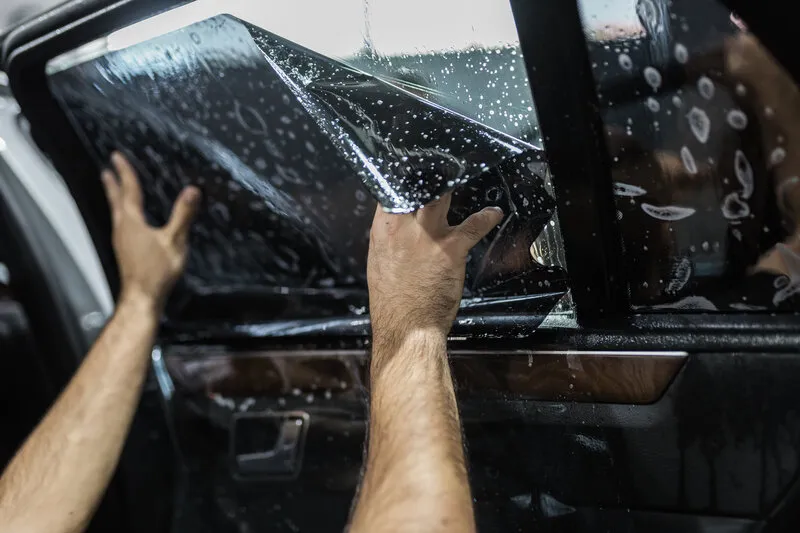
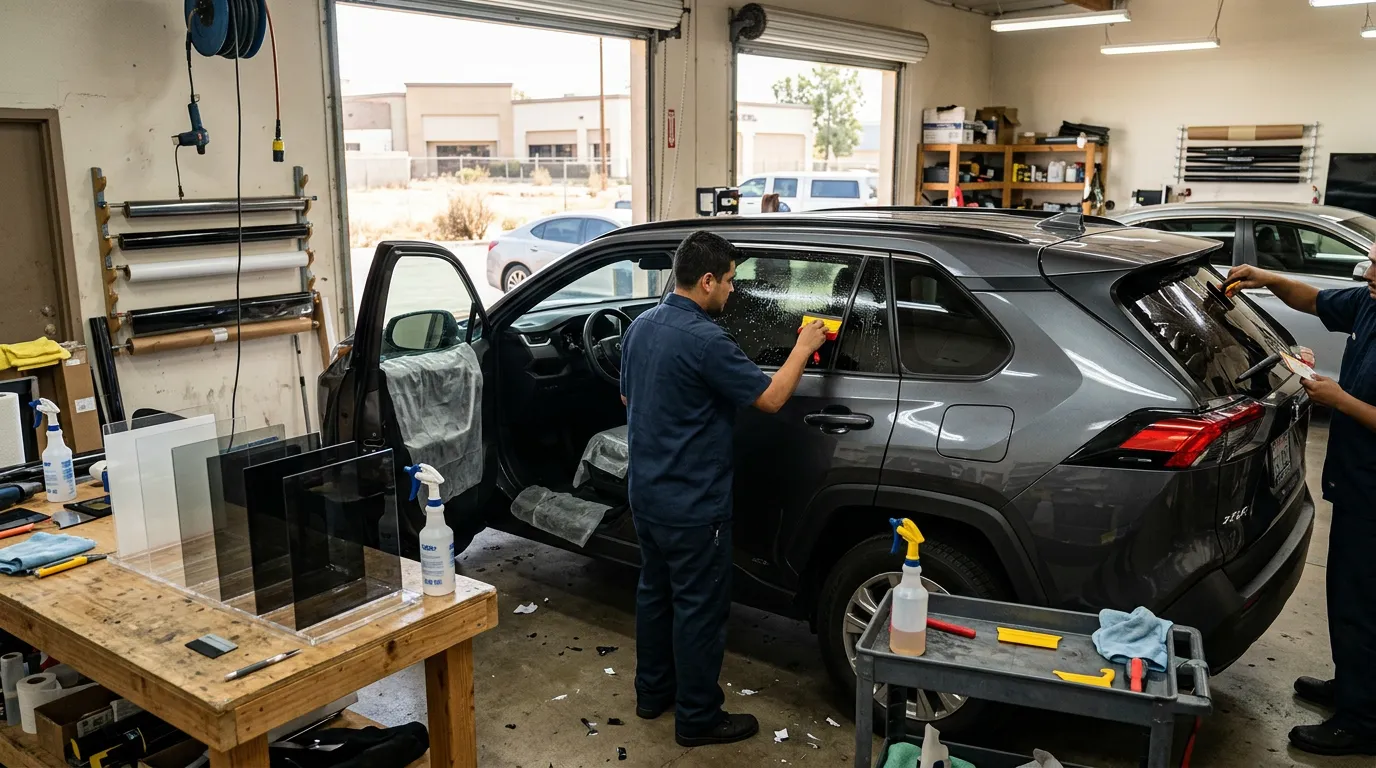
Car window tinting in Ontario, CA can start under $300 for many cars, but the final amount depends on the vehicle, film grade, amount of glass, whether old film needs removal, and whether the windshield is included.
Audio Vision currently publishes starting prices for four side windows plus rear glass. At the time this guide was prepared, its published window tint promotion listed carbon film starting at $199 for a sedan or coupe, $249 for a truck or midsize SUV, and $329 for a large SUV.
The same published promotion lists ceramic film starting at $269 for a sedan or coupe, $329 for a truck or midsize SUV, and $399 for a large SUV.
Windshield tint is listed separately.
These are published starting prices from Audio Vision’s current promotion page, not a guaranteed quote for every vehicle. Glass shape, existing film, vehicle configuration, and requested coverage can change the final amount.
For an exact quote, call Audio Vision at (909) 983-4500 or use the Audio Vision contact page.
“Full-car tint” does not always mean every piece of automotive glass.
Audio Vision’s current promotion describes its main package as four sides plus rear glass.
For a typical four-door sedan, that means the roll-up side windows and rear windshield.
The front windshield is listed separately.
Sunroofs, panoramic roofs, small quarter windows, and other glass may also need to be discussed separately depending on the vehicle.
Before comparing prices, ask exactly which windows are included.
Two shops can both advertise a “full car” package while covering different pieces of glass.
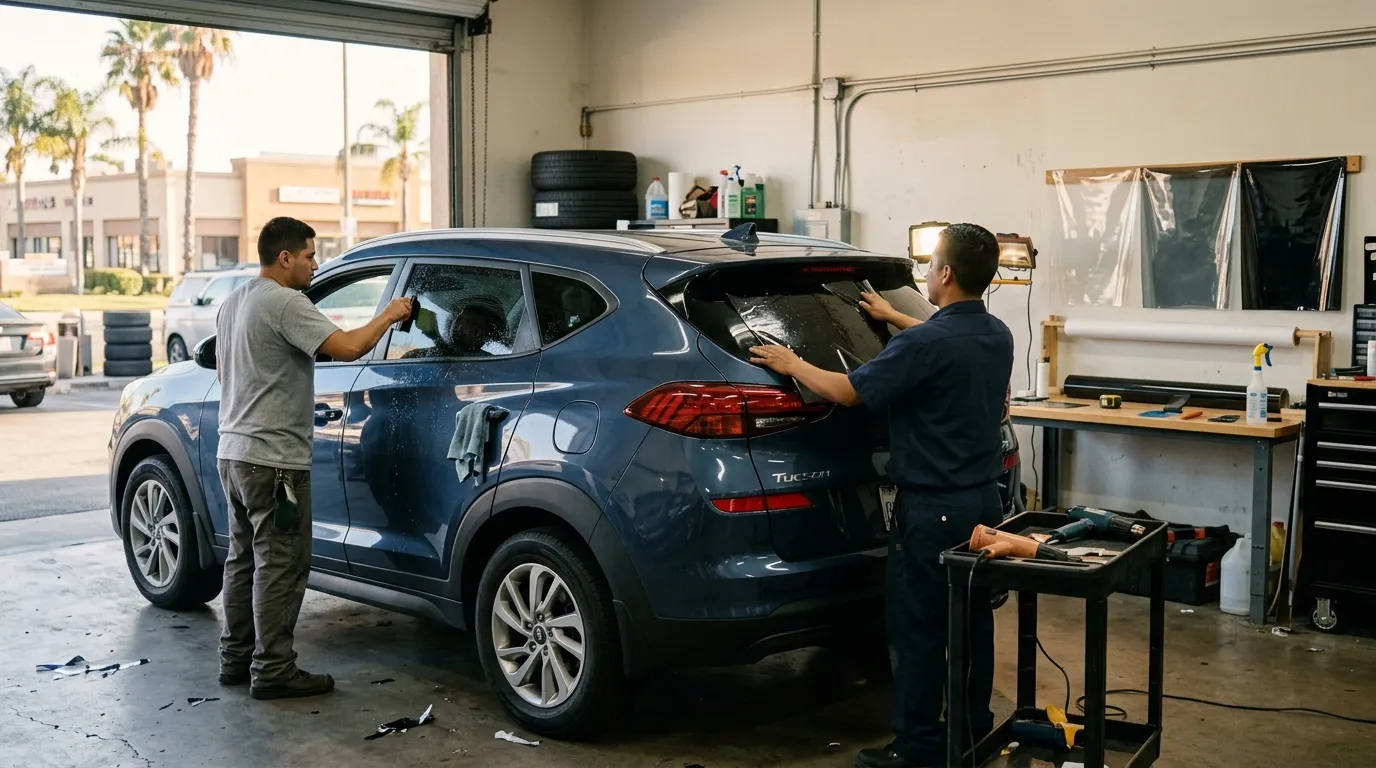
For Audio Vision’s current promotion, the published package clearly states four sides plus rear glass.
Audio Vision currently publishes separate starting prices for carbon and ceramic window film.
Audio Vision’s current promotion lists:
The published package covers four side windows plus rear glass.
Windshield film is listed separately at:
Audio Vision currently lists ceramic starting at:
Published windshield figures are:
These figures come from Audio Vision’s published promotion and can change.
Vehicle configuration can also affect the actual quote.
Call (909) 983-4500 before scheduling if the final amount is part of your decision.
Vehicle size changes the amount of film and labor required.
A compact sedan may have four roll-up windows and one moderate-size rear windshield.
A large SUV may have:
A panoramic-roof vehicle adds another large area if the owner wants that glass treated too.
3M says automotive window film pricing can vary based on vehicle size and type, the area being covered, and the window film chosen.
That is why asking, “How much is tint?” without giving the year, make, and model can only produce a starting figure.
For car window tinting in Ontario, CA, have your vehicle information ready when requesting a quote.
Carbon film sits between low-cost dyed films and higher-performing ceramic films in many product lineups.
Audio Vision currently lists KAVACA Carbon Color Stable Window Film on its tint promotion page.
Its published carbon starting price is $199 for a sedan or coupe with four side windows and the rear glass.
Drivers may choose carbon film when they want:
Carbon film can be a good fit for someone who wants a complete tint job without stepping into the ceramic price tier.
Ask what film shades are available and which ones work with California law on the front side glass.
Audio Vision’s published ceramic package currently starts at $269 for a sedan or coupe.
The same package starts at $329 for a truck or midsize SUV and $399 for a large SUV.
Audio Vision lists KAVACA Ceramic IR film as one of its ceramic choices.
Ceramic tint is often selected by drivers who care heavily about cabin heat and infrared energy.
3M’s Ceramic IR line uses nano-ceramic technology and is designed to reject solar and infrared energy without using metallic construction.
LLumar also describes its ceramic films as using microscopic nano-ceramic particles to reduce solar heat and block UV radiation.
That makes ceramic worth comparing when your car spends a lot of time outside in Ontario, CA.
The price difference comes from the film rather than simply making the glass darker.
Ceramic products use particles and film construction designed to control more of the solar energy reaching the interior.
3M currently lists Ceramic IR films that can reject up to 66% of total solar energy and up to 95% of measured infrared energy under its stated test conditions.
LLumar’s ceramic product family is also built around nano-ceramic heat control.
Actual figures change by product and shade.
The lesson is simple: compare the film data, not only the word “ceramic.”
Ask which product line is being installed.
Then compare:
A darker low-tier film is not automatically a stronger heat-control film.
Not in Audio Vision’s currently published four-sides-plus-rear package.
The windshield is priced separately on its promotion page.
This is worth checking whenever you compare tint quotes.
Some quotes may include:
while another may include:
Those are different jobs.
California also has rules governing material on the windshield, so the type and location of any windshield treatment need to be selected with current state law in mind.
Ask what windshield options are available for your vehicle and what coverage the installer recommends for street use.
Existing film can add time before new tint even begins.
Old window film may be:
The installer needs to remove the old material and prepare clean glass before installing the new film.
Rear glass can take extra care because defroster lines are attached to the glass.
Tell the shop that the vehicle already has film when asking for a quote.
A car arriving with bare factory glass is a different job from a vehicle with years-old bubbling film across every window.
Next steps are easier when the installer knows the condition before your appointment.
Not always.
Within one film family, different VLT shades may be priced similarly.
The larger price jump is often between film constructions such as carbon and ceramic.
Darkness should be selected for visibility, appearance, privacy, and legal use.
Heat performance should be compared using the manufacturer’s solar specifications.
Do not assume that choosing the darkest shade produces the coolest cabin.
That is not how modern window film works.
This distinction matters when shopping for car window tinting in Ontario, CA.
Tint darkness deals with visible light.
Heat rejection deals with solar energy.
3M’s Crystalline technology shows how different those measurements can be. The company says its multilayer optical film can reject more heat than many darker films without dramatically changing the appearance of the glass.
Its Ceramic IR line offers lighter VLT options while still providing infrared and solar-energy control.
So if you want a cooler cabin but do not want very dark windows, ask about lighter ceramic or optical film options.
You do not have to make the cabin extremely dark just to get better solar control.
VLT stands for Visible Light Transmittance.
It describes the percentage of visible light passing through the filmed glass.
A high VLT number means lighter glass.
A low VLT number means darker glass.
A 70% film allows much more visible light through than a 20% film.
Keep another point in mind.
The film percentage and the finished glass measurement are not always identical.
Automotive glass already has its own light transmission before film is installed.
Once tint is applied, the glass and film work together.
That finished measurement matters when dealing with legal limits.
Many SUVs and trucks come with dark factory glass behind the front seats.
That glass may look tinted, but factory privacy glass and aftermarket solar-control film are not necessarily doing the same job.
You may choose to put a lighter heat-control film over existing privacy glass.
This can help make the front and rear portions of the vehicle work more closely together from a solar-control standpoint while retaining the darker factory appearance in back.
The finished shade also needs consideration.
Putting dark aftermarket film over already dark privacy glass can make the rear section very dark.
If nighttime visibility matters to you, mention that before choosing the rear film.
The rear windshield is often one of the larger and more curved pieces of glass on the vehicle.
Film needs to conform cleanly to that shape.
Rear glass can also contain:
Some vehicles have unusually large rear windows.
EVs and hatchbacks can have glass shapes that require more film and additional fitting work.
A full-car quote should be based on the actual vehicle rather than only the number of doors.
California treats the front side windows differently from the glass behind the driver.
California Vehicle Code Section 26708 contains the state’s rules for material applied to vehicle windows.
For qualifying clear, colorless material on the front side windows, the statute sets an 88% VLT requirement for the material and requires the finished glazing to remain within the applicable federal 70% light-transmission requirement.
The statute also contains conditions involving certification and UVA protection.
Rear side windows have broader treatment under California law.
Rear-window treatment is also permitted under stated conditions involving outside mirrors.
This is why many California vehicles have much darker rear glass than front side glass.
Tell Audio Vision that street legality is part of your goal before choosing a shade.
Do not compare only the total number at the bottom.
Ask each shop the same questions.
Get the manufacturer and product line.
Those products can have different solar performance.
Confirm whether “full car” means four sides and rear or includes additional glass.
Audio Vision currently lists it separately.
Removal can change the job.
Audio Vision says it carries tint intended to last and advertises warranty coverage on its tint promotion page.
Discuss that before the appointment.
Comparing the same film type and same glass coverage gives you a much more useful picture than comparing two unrelated packages.
Your priorities can narrow the decision quickly.
Carbon may fit drivers looking for a darker cabin, glare reduction, and a lower starting price than ceramic.
Ceramic is worth comparing if your car spends hours outdoors or you regularly commute in warm weather.
Very dark rear glass can be harder to see through at night.
Think about where and when you drive.
You may care about appearance across the side and rear windows but want a lighter heat-control approach elsewhere.
The solution does not need to be one darkness level on every piece of glass.
Drivers searching for car window tinting in Ontario, CA can visit Audio Vision nearby in Montclair, CA.
Audio Vision lists Ontario, CA among the communities it serves and provides window tint installation for sedans, coupes, trucks, SUVs, and other vehicles.
The shop is located at:
Audio Vision
5521 Holt Blvd
Montclair, CA 91763
Phone: (909) 983-4500
Hours: Monday through Sunday, 9:00 AM to 7:00 PM
Audio Vision also serves Montclair, CA, Pomona, CA, Rancho Cucamonga, CA, Chino, CA, Chino Hills, CA, Claremont, CA, and surrounding Inland Empire communities.
Current published starting prices can give you a planning figure, but your actual quote should be based on your vehicle.
Have these details ready:
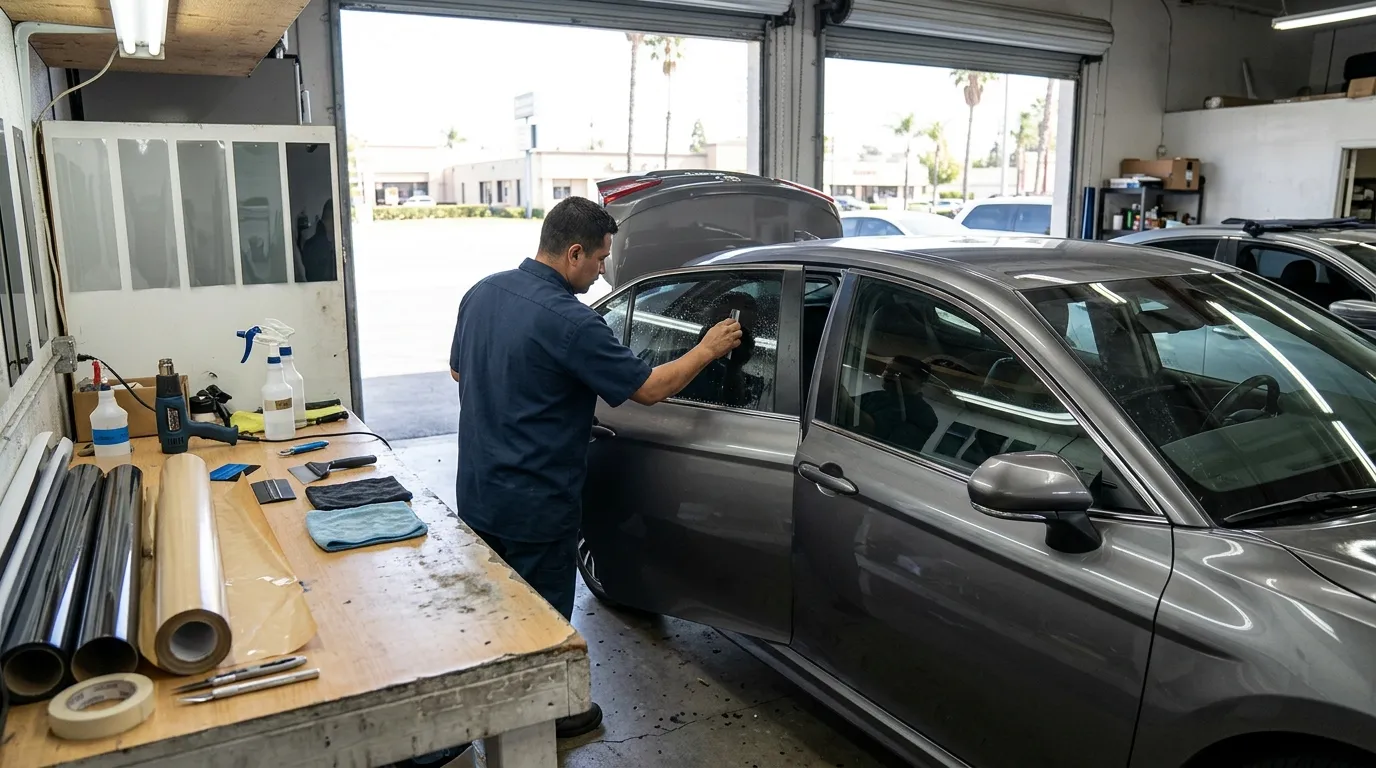
Call (909) 983-4500 or contact Audio Vision online for a current quote and appointment.
Audio Vision’s currently published promotion lists four-side-plus-rear carbon film starting at $199 for a sedan or coupe, $249 for a truck or midsize SUV, and $329 for a large SUV. Ceramic currently starts at $269, $329, and $399 for those same vehicle groups. Windshield film is listed separately. Call the shop for the current price for your vehicle.
Audio Vision’s current published starting prices place ceramic above carbon. The difference comes from the film technology and solar-control properties. Your vehicle and glass coverage can also affect the final quote.
Audio Vision’s current promotion defines the main package as four side windows plus rear glass and lists windshield tint separately. Ask about windshield options when requesting your quote.
It can make sense for drivers who place a lot of weight on solar and infrared heat control. 3M and LLumar both offer ceramic film families designed around heat reduction while avoiding metallic film construction.
Not automatically. VLT measures visible light transmission. Solar and infrared rejection are separate measurements. A lighter high-performance film can reject more heat than some darker lower-tier films.
It can add labor because the existing film and adhesive may need to be removed before new film is installed. Tell the shop about bubbling, peeling, or old tint when requesting your quote.
Audio Vision provides window tint installation from its shop at 5521 Holt Blvd, Montclair, CA 91763, near Ontario, CA. Call (909) 983-4500 or use the Audio Vision contact page for a current quote.
Looking for the best car audio installation in Montclair, CA? Discover expert tips, top brands, and why Audio Vision is the go-to destination for high-quality car sound systems.
Product Brand: Audio Vision
Product Currency: USD
Product Price: 299
Product In-Stock: InStock

Acima, a flexible lease-to-own option that helps you get the car upgrades you love—without needing perfect credit. Whether you’re looking for car audio, video, security systems, window tint, wheels, auto lighting, or accessories, Acima makes it easy with no credit needed and convenient payment options. Get what you want today and pay over time, hassle-free!

Snap Finance is here to help you get the car audio, video, security, window tint, wheels, lighting, and accessories you need today. With Snap Finance, you can shop now and pay later, thanks to their flexible payment plans that consider more than just your credit score. Applying is fast and easy, and you’ll receive a decision in seconds. Take advantage of stress-free payment options that fit your payday schedule, so you can upgrade your ride without the wait!
Explore the many services we offer by clicking the boxes below


|
|
|
|
|
|
|
|
|
|
|
|
|
|
|
|
Car Window Tinting in Ontario, CA: What a Full-Car Tint Costs
|
Car Window Tinting in Ontario, CA: What a Full-Car Tint Costs
|
Car Window Tinting in Ontario, CA: What a Full-Car Tint Costs
|
Car Window Tinting in Ontario, CA: What a Full-Car Tint Costs
|
|
|
|
|
|
|
|
|
|
|
|
|
|
|
|
|
|
|
|
|
|
|
|
|
|
|