

Looking for the best car audio installation in Montclair, CA? Discover expert tips, top brands, and why Audio Vision is the go-to destination for high-quality car sound systems.
Product Brand: Audio Vision
Product Currency: USD
Product Price: 299
Product In-Stock: InStock
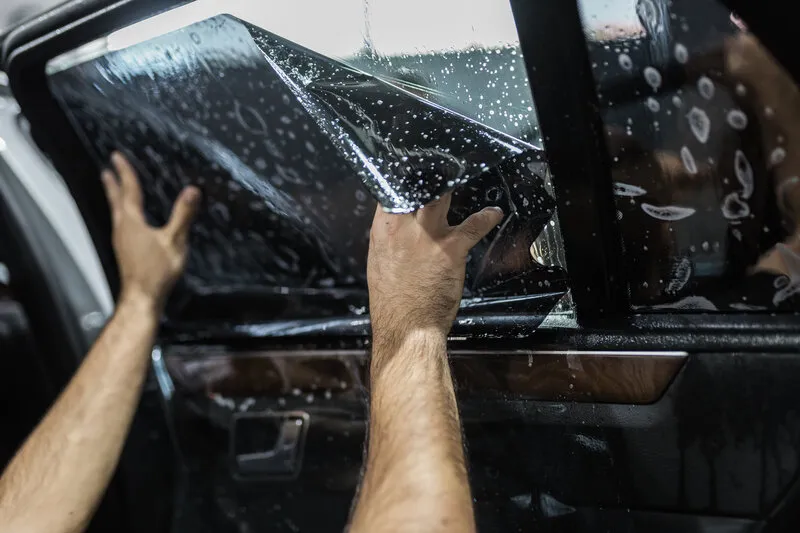
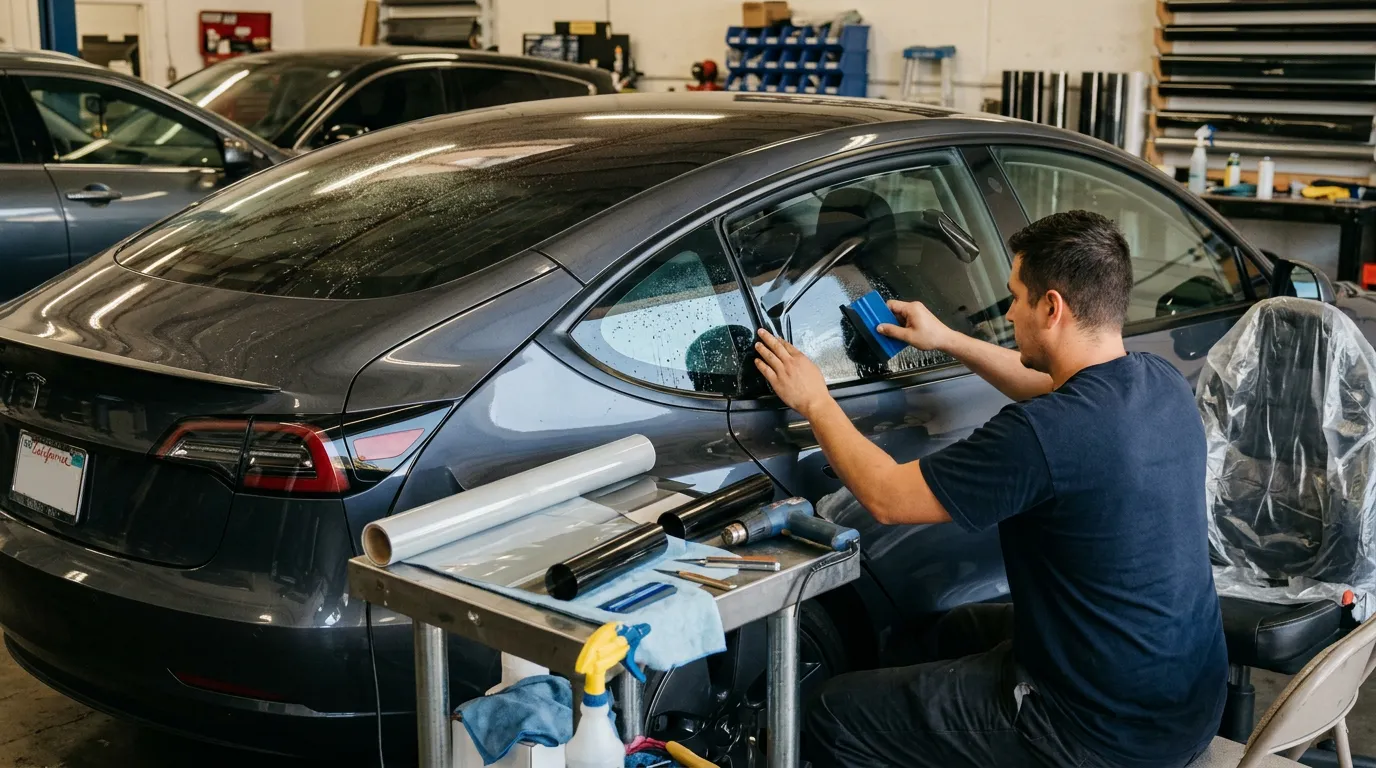
Window tint in Pomona, CA can make a major difference in glare, cabin heat, privacy, and the appearance of your vehicle, but choosing tint involves more than picking the darkest shade on a sample board. Film construction, visible light transmission, heat rejection, window coverage, vehicle size, and California law all affect the final choice.
Cost changes for the same reasons.
Tinting two front windows is a smaller job than covering the side and rear glass of a large SUV. A higher-grade ceramic film can also cost more than an entry-level film because its material and heat-rejection properties are different.
California law adds another consideration, especially on the windshield and front side windows.
As of 2026, California Vehicle Code Section 26708 allows certain clear, colorless, transparent material on the front side windows when the film itself has at least 88% visible light transmission and the finished glass-and-film combination meets the federal 70% light-transmission requirement. California gives more room for side windows behind the driver and the rear window when the vehicle has qualifying outside mirrors.
That means legal tint selection should happen before installation, not after a traffic stop.
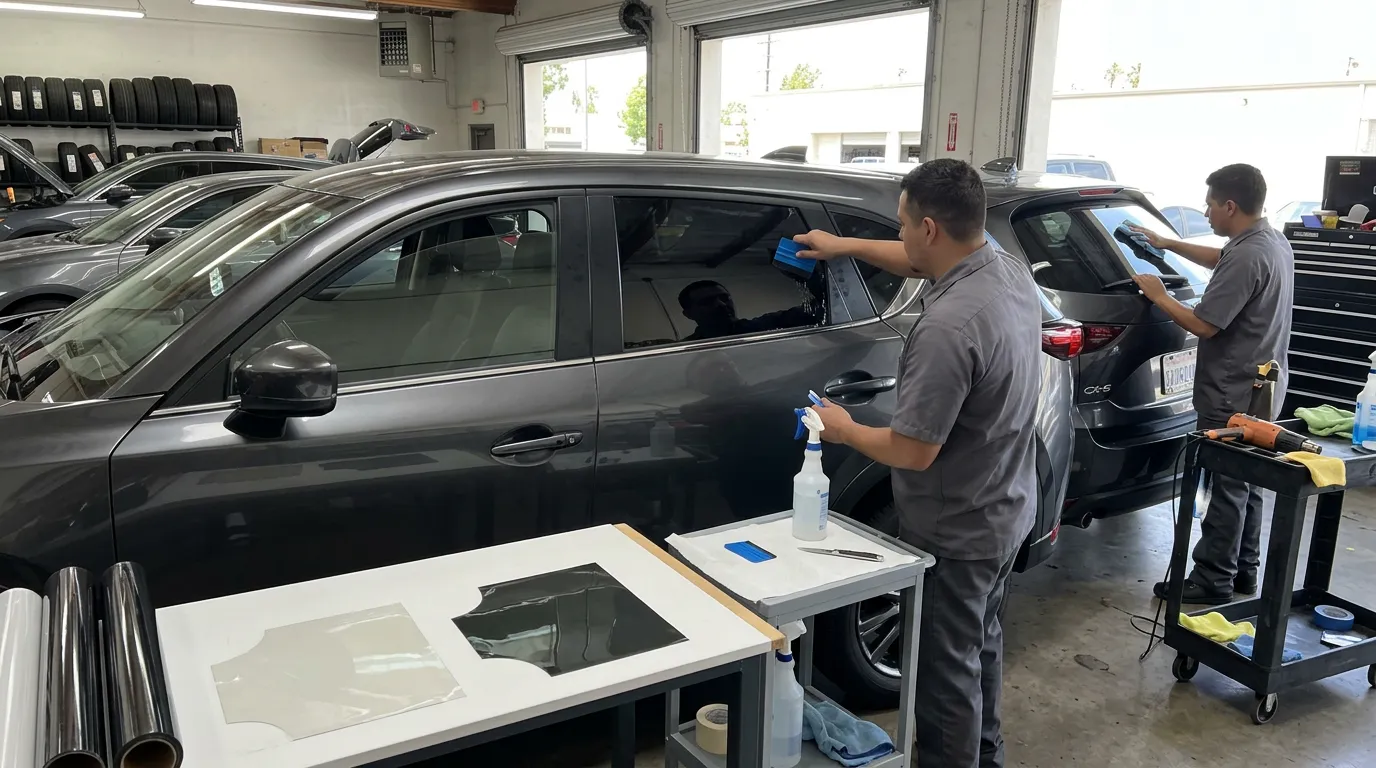
Audio Vision offers window tint from its Montclair, CA shop and has a dedicated window tint service page for Pomona, CA.
There is no single price for every vehicle.
3M states that automotive tint pricing varies based on the vehicle’s size and type, how much glass is being covered, and the window film selected.
Those three factors explain most quote differences.
A tint quote can change based on:
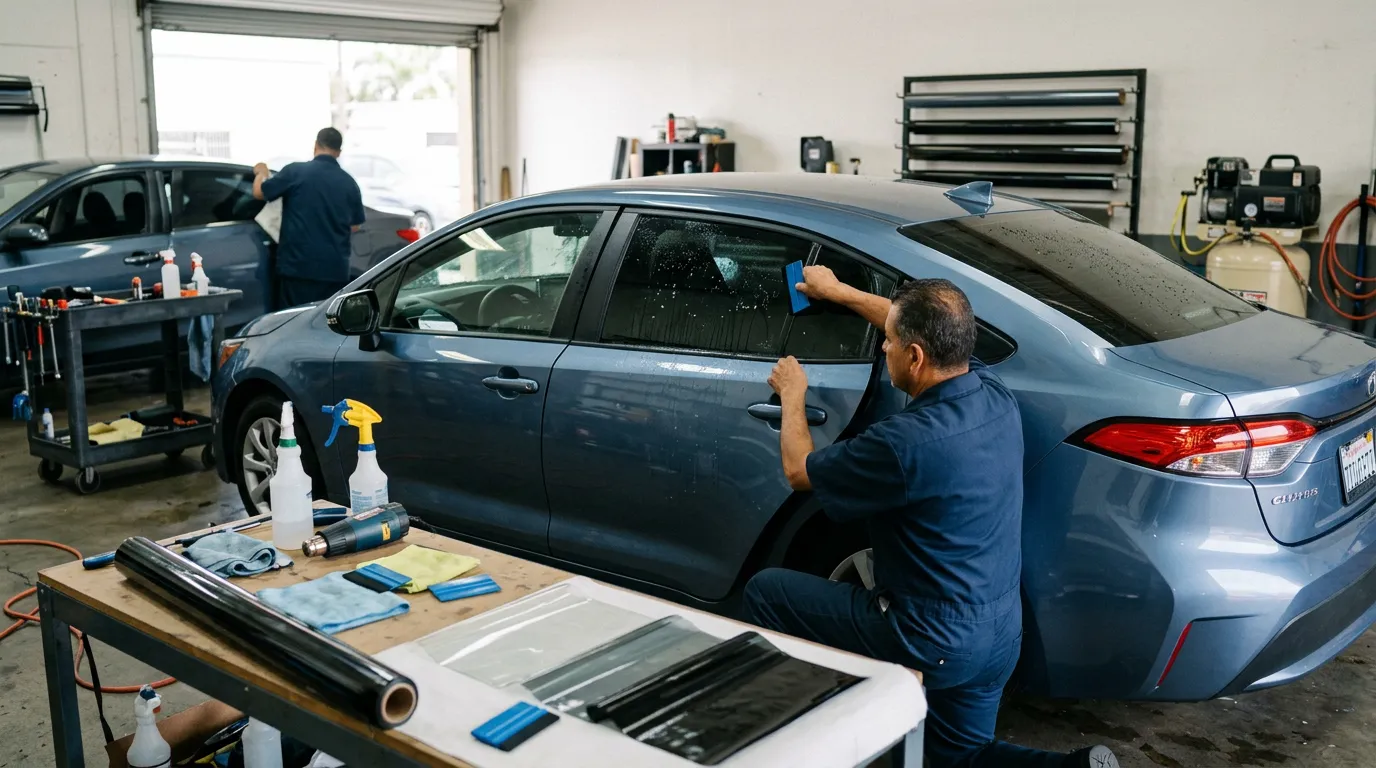
A small sedan with straightforward glass can require less film and labor than a three-row SUV with several side windows and a large rear hatch.
The amount of coverage matters too.
You may want:
For a vehicle-specific quote, call Audio Vision at (909) 983-4500 or use the contact page.
Not every automotive tint film is built the same way.
Film manufacturers use different materials and construction methods to control visible light, UV exposure, infrared energy, glare, and solar heat.
That creates several broad film groups.
Terminology can differ between manufacturers, but shoppers commonly encounter:
Moving into higher-performing film usually raises material cost.
The better question is not simply, “Which tint is darkest?”
Ask what the film does with solar energy.
Tinted film can use dyes to produce its shade.
Modern color-stable products may combine dye technology with other materials to improve color retention and solar performance.
3M’s current Color Stable Series uses patented dye technology along with ceramic nanoparticles.
3M states that this film is non-metalized, which means it is designed not to interfere with GPS, satellite radio, mobile phones, or 5G signals.
A color-stable film can suit drivers mainly looking for:
Different brands use different constructions, so ask which exact film line the shop is quoting.
Carbon technology is another option used in automotive tint.
3M describes its Color Stable technology as using nano-carbon polyester in combination with its film construction.
Carbon-based films are commonly chosen by drivers looking for stable color without using a metallic layer.
That matters in a vehicle filled with electronics.
Modern cars rely on:
A non-metalized film avoids adding a metallic layer around the glass that could affect certain signals.
When comparing film grades, ask whether the film contains metal and whether the manufacturer lists it as safe for vehicle electronics.
Ceramic tint is often selected by drivers who care about heat rejection as much as darkness.
LLumar states that its ceramic automotive films use microscopic nano-ceramic particles to reduce solar heat and block up to 99% of harmful UV rays across supported film products.
3M’s Ceramic IR Series also uses nano-ceramic technology.
3M currently reports up to 66% total solar energy rejection and up to 95% rejection of heat-producing infrared rays on supported Ceramic IR configurations.
Those figures differ by shade and glass.
Do not assume every ceramic film performs identically just because “ceramic” appears in the name.
Ask to see manufacturer specifications for the film being installed.
Useful numbers include:
Another film class uses many thin optical layers rather than relying only on a dark shade.
3M’s Crystalline Series uses a proprietary multilayer optical construction with more than 200 layers.
3M says this type of film can reject substantial solar and infrared energy without requiring extremely dark glass.
That makes an important point about modern tint:
Darkness and heat rejection are not the same measurement.
A lighter high-performing film can sometimes reject more solar energy than a darker lower-grade film.
Drivers who want strong heat control without making every window very dark may want to compare these film types.
VLT means Visible Light Transmittance.
3M defines VLT as the percentage of visible light that passes through filmed glass.
A higher percentage means more visible light passes through.
A lower percentage means the glass looks darker.
Think of it like this:
One detail matters when discussing legal limits.
The number printed on a film sample does not always equal the final VLT of the installed window.
Factory automotive glass may already block some visible light.
When film is applied, the finished combination of glass and film determines the actual light transmission.
That is especially relevant for California’s front side window requirement.
California Vehicle Code Section 26708 contains the rules that affect tint and other material applied to vehicle windows.
For the front side windows immediately to the left and right of the front seat, the current law permits clear, colorless, transparent material when several conditions are met.
The statute says:
This is why copying a dark rear-window shade onto the front side windows can create a legal problem in California.
If street legality matters to you, tell the tint shop before selecting the shade.
California does not treat the windshield like the side windows.
Section 26708 allows transparent material on the topmost part of the windshield only when stated conditions are met.
Among those conditions:
You may hear simplified rules describing a fixed strip depth.
The current California statute itself uses the seat-height measurement described above.
For a street-driven vehicle, have the installer work from the current California requirement rather than relying on a social-media diagram.
California provides broader treatment for windows behind the driver.
Vehicle Code Section 26708 exempts side windows located to the rear of the driver from the general prohibition.
The law also allows material on the rear window when the vehicle has outside mirrors on both the left and right sides that provide the required rearward view.
This is why many California vehicles have darker rear passenger windows than front side windows.
Factory privacy glass on SUVs, trucks, and crossovers also often makes the rear section look darker before aftermarket film is added.
An installer can help you choose a rear shade that works visually with the lighter front glass.
California has more than one medical provision related to sun screening.
Under Section 26708(b)(10), certain removable sun-screening devices can be used on the front side windows when the driver or front passenger carries qualifying documentation from a licensed physician and surgeon or licensed optometrist.
Section 26708.2 says qualifying transparent removable devices must:
The law states that these devices cannot be used during darkness.
California also has a separate provision in Section 26708(e) for clear, colorless, transparent film when a licensed dermatologist certifies that the person should not be exposed to ultraviolet rays because of a medical condition.
That film provision includes the same 88% material VLT and federal 70% finished-glazing standards found in the statute.
Medical tint rules are narrow.
Anyone relying on an exemption should read the current statute and carry the required documentation.
Not necessarily.
This is one of the biggest misunderstandings around automotive tint.
Darkness measures visible light.
Heat performance involves solar and infrared energy.
3M’s film specifications show why these numbers should be compared separately.
The company sells relatively light films designed to reject substantial solar energy, while darker films may be chosen more for appearance, glare, or privacy.
That means you can ask for a film based on:
rather than assuming one shade handles every goal equally well.
Here’s what matters: compare the film specification, not only the shade card.
Ceramic films use more advanced material construction than many entry-level films.
Manufacturers such as 3M and LLumar position ceramic products around stronger infrared and solar-energy control.
That material difference can raise the film portion of the quote.
Whether it makes sense for you depends on your priorities.
Ceramic tint may appeal to a Pomona, CA driver who:
If you mainly want a darker appearance and glare reduction, another film tier may fit your needs.
Audio Vision can provide the actual price difference for the films available for your vehicle.
Film grade is only part of window tint in Pomona, CA pricing.
The vehicle itself changes the job.
A four-door sedan has more glass than a small coupe.
A large SUV can have:
Some rear windows also have strong curvature.
Automotive tint film is commonly heat-shaped before installation so it follows curved glass properly.
Window access can matter too.
Interior panels, brake lights, rear decks, seals, and other parts can make certain windows more time-consuming to work around.
This is why the most accurate quote begins with your year, make, and model.
If your vehicle already has failing film, it may need to come off before the new tint goes on.
Old film can develop:
Removal can be more involved when the film has been on the glass for years.
The rear window deserves care because many vehicles have defroster lines attached to the glass.
Tell the shop if the car already has film before asking for a quote.
That lets the installer account for removal rather than discovering the extra work when the vehicle arrives.
Start with your reason for tinting.
Compare ceramic and other high solar-rejection films.
Ask for manufacturer data rather than judging the film only by darkness.
Look at the film on actual vehicles when possible.
A 35% film and a very dark rear shade can create very different looks.
Rear side and rear glass provide more shade choices under California law than the front side windows.
Consider how a darker shade affects your ability to see through side and rear windows in poorly lit areas.
Tell the installer you want the vehicle kept within current California requirements.
Front side glass deserves the closest attention.
Ask what adding film will do to the finished appearance and solar performance.
Factory dark glass and aftermarket solar-control film are not necessarily the same thing.
Drivers searching for window tint in Pomona, CA can visit Audio Vision nearby in Montclair, CA.
Audio Vision has a dedicated Pomona, CA window tint page and offers window tint installation for customers throughout the area.
The shop is located at:
Audio Vision
5521 Holt Blvd
Montclair, CA 91763
Phone: (909) 983-4500
Hours: Monday through Sunday, 9:00 AM to 7:00 PM
Audio Vision serves drivers from Pomona, CA, Montclair, CA, Ontario, CA, Claremont, CA, Chino, CA, Chino Hills, CA, Rancho Cucamonga, CA, and surrounding communities.
When you contact the shop, have the following ready:
Audio Vision can then explain the film choices available for your vehicle and provide a quote.
Call (909) 983-4500 or contact Audio Vision online to schedule an appointment.
The price depends on vehicle size, film choice, number of windows, glass shape, and whether old film needs to be removed. 3M also states that automotive tint pricing changes based on vehicle type, installation area, and film selected. Call Audio Vision at (909) 983-4500 for a quote based on your vehicle.
Ceramic film is designed with heat control in mind. LLumar says its ceramic films use nano-ceramic particles for solar and infrared control, while 3M lists high infrared rejection for its Ceramic IR Series. Actual performance differs by product and shade, so compare the manufacturer’s specifications.
California Vehicle Code Section 26708 currently allows qualifying clear, colorless, transparent material with at least 88% VLT on the front side windows when the finished glazing also meets the federal minimum of 70% visible light transmission and the other conditions in the statute are met.
California gives more freedom to side windows behind the driver. Rear-window material is also allowed under Section 26708 when the vehicle has qualifying outside mirrors on both sides. Your installer can discuss rear shade choices for your vehicle.
California generally restricts material applied to the windshield. The law allows qualifying transparent material at the topmost portion when it meets the placement, color, lettering, and reflectivity conditions in Section 26708. A separate medical provision exists for qualifying clear, colorless UV film with dermatologist documentation.
No. VLT measures visible light transmission, not the full amount of solar heat rejected. Modern ceramic and multilayer films can provide strong solar performance without being the darkest film available.
Audio Vision provides window tint installation from its shop at 5521 Holt Blvd, Montclair, CA 91763, near Pomona, CA. Call (909) 983-4500 or use the Audio Vision contact page to discuss film grades, legal shade choices, and your vehicle.
Looking for the best car audio installation in Montclair, CA? Discover expert tips, top brands, and why Audio Vision is the go-to destination for high-quality car sound systems.
Product Brand: Audio Vision
Product Currency: USD
Product Price: 299
Product In-Stock: InStock

Acima, a flexible lease-to-own option that helps you get the car upgrades you love—without needing perfect credit. Whether you’re looking for car audio, video, security systems, window tint, wheels, auto lighting, or accessories, Acima makes it easy with no credit needed and convenient payment options. Get what you want today and pay over time, hassle-free!

Snap Finance is here to help you get the car audio, video, security, window tint, wheels, lighting, and accessories you need today. With Snap Finance, you can shop now and pay later, thanks to their flexible payment plans that consider more than just your credit score. Applying is fast and easy, and you’ll receive a decision in seconds. Take advantage of stress-free payment options that fit your payday schedule, so you can upgrade your ride without the wait!
Explore the many services we offer by clicking the boxes below


|
|
|
|
|
|
|
|
|
|
|
|
|
|
|
|
Window Tint in Pomona, CA: Film Grades, Cost & Legal Limits
|
Window Tint in Pomona, CA: Film Grades, Cost & Legal Limits
|
Window Tint in Pomona, CA: Film Grades, Cost & Legal Limits
|
Window Tint in Pomona, CA: Film Grades, Cost & Legal Limits
|
|
|
|
|
|
|
|
|
|
|
|
|
|
|
|
|
|
|
|
|
|
|
|
|
|
|