

Looking for the best car audio installation in Montclair, CA? Discover expert tips, top brands, and why Audio Vision is the go-to destination for high-quality car sound systems.
Product Brand: Audio Vision
Product Currency: USD
Product Price: 299
Product In-Stock: InStock
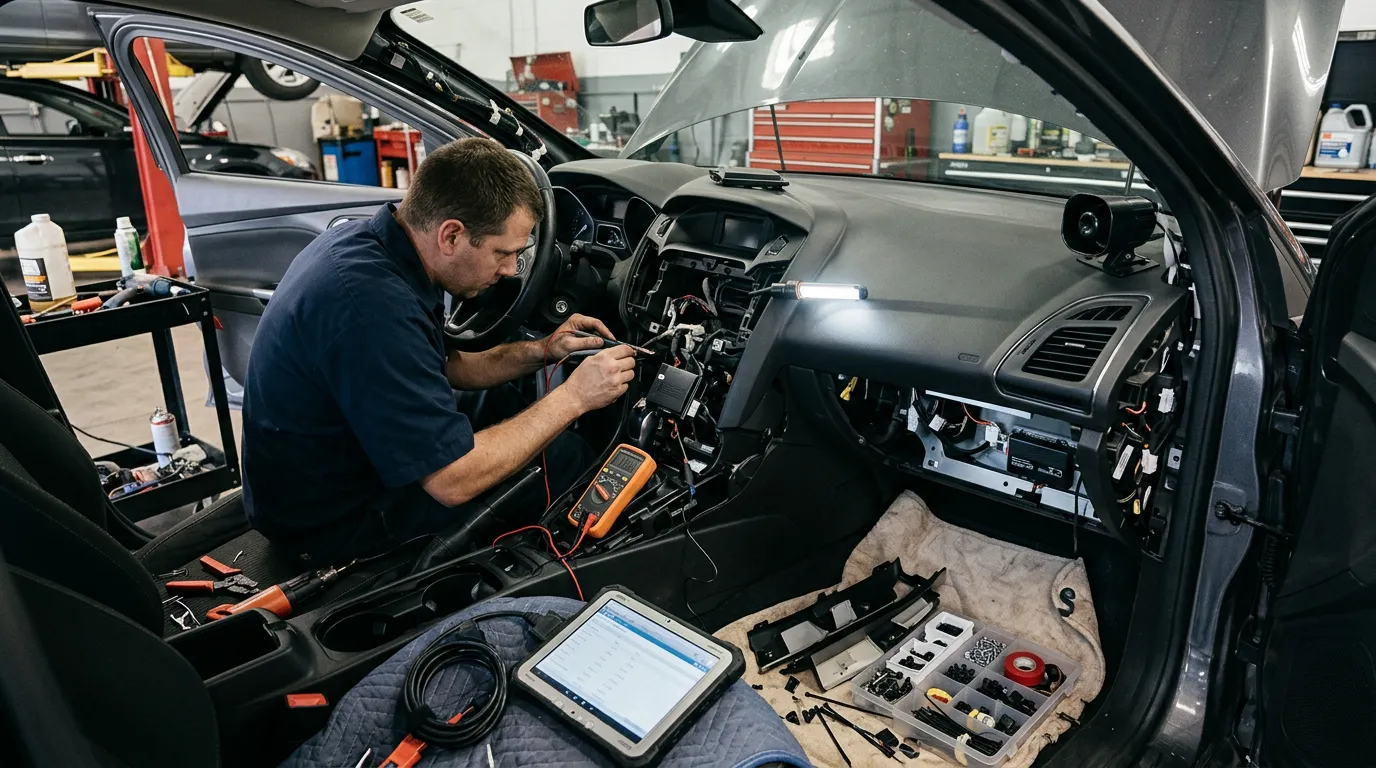
Car security system installation can go far beyond adding a siren under the hood. A complete vehicle security build may combine door monitoring, impact and tilt sensors, starter disable, two-way alerts, GPS tracking, smartphone control, hood and trunk monitoring, and remote start on compatible vehicles.
Each part handles a different job.
The siren draws attention. Sensors detect activity. A starter-kill relay adds another starting barrier. Two-way remotes tell you when the alarm has been triggered. GPS hardware can show vehicle location. A connected app can put alerts and controls on your phone.
That does not mean every vehicle needs every piece of equipment.
A daily commuter with factory wheels may need a different setup than a truck with an upgraded car audio system, custom wheels, or equipment stored inside.
Audio Vision installs car security systems, car alarms, and GPS tracking systems from its Montclair, CA shop for drivers throughout the Inland Empire.
A complete system can contain several layers.
Depending on the vehicle and selected equipment, a car security system installation may include:
Compustar’s current security lineup supports combinations of impact sensing, tilt detection, glass-break detection, starter kill, two-way alarm alerts, GPS tracking, and DroneMobile smartphone connectivity.
Viper also sells current systems that combine alarm functions with starter interrupt, impact sensing, two-way remotes, remote start, and SmartStart-connected options.
The right build starts by choosing the problems you want the equipment to watch for.
The control module is the center of the aftermarket security system.
It receives information from sensors and vehicle circuits, then responds according to the way the alarm has been programmed.
The module may monitor signals from:
It may also control:
The module should be securely mounted and its wiring should be routed cleanly.
Leaving a control module loose below the dashboard is not the goal of a finished installation.
The siren is the part most people associate with a car alarm.
When the system detects a supported alarm event, it can sound the siren to draw attention.
Compustar currently lists a 105+ dB siren with several of its security packages.
Many systems can also flash the vehicle’s parking lights during an alarm event.
Those two alerts work together.
The siren provides an audible warning while the flashing lights make the affected vehicle easier to identify in a parking area.
A siren is useful, but it is only one layer of a full security build.
If you are too far away to hear it, a two-way remote or smartphone notification can add another way to learn that something happened.
A car alarm should know when monitored entry points open while the system is armed.
That can include:
The exact connections depend on the vehicle.
Some older cars use straightforward trigger wires.
Newer vehicles may communicate lock, door, hood, and trunk information through onboard data networks.
The installer needs to determine which vehicle signals are available and how the chosen security equipment communicates with them.
Hood monitoring matters for another reason.
Many alarm and remote-start systems place electrical equipment in the engine compartment. A hood input can also be part of the safety logic on supported remote-start installations.
Impact sensing watches for physical disturbance.
Compustar’s current DAS-II sensor can detect two levels of impact.
That allows the alarm system to react differently to a lighter disturbance and a stronger event, depending on setup.
Sensor adjustment matters.
Set it too low and normal environmental movement may create unwanted alerts.
Set it too high and smaller impacts may not trigger the response you expected.
A trained installer can set the sensor and test the vehicle after installation.
Ask where the impact sensor will be placed and how its sensitivity will be adjusted.
Tilt sensing watches for changes in vehicle angle.
This can be useful for cars and trucks with custom wheels because the sensor can respond when the vehicle is lifted.
Compustar’s DAS-II combines tilt sensing with impact and glass-break detection.
A tilt sensor does not physically prevent someone from lifting a vehicle.
Its job is detection.
Once the security system detects the change in angle, it can respond through the configured alarm functions, such as sounding the siren and sending a supported two-way or connected alert.
If wheel theft is one of your concerns, tell the installer before choosing the sensor package.
A broken window does not always involve enough vehicle movement to trigger an impact sensor the way you expect.
Glass-break sensing adds another detection method.
Compustar’s DAS-II uses a glass-break sensor along with impact and tilt sensing.
That gives the alarm more than one way to detect activity.
This can make sense for vehicles that regularly carry equipment or personal property inside.
It may also appeal to owners with upgraded audio equipment who want another detection layer beyond the doors.
A starter-kill or starter-interrupt circuit is intended to stop the starter from operating while the security system is armed.
Compustar describes its E-LOCK starter-kill relay as disabling the starter until the security system is disarmed.
Viper also lists starter interrupt on current alarm and remote-start systems.
This is different from the siren.
The siren makes noise.
Starter interrupt affects the starting circuit under the conditions built into the system.
It is also different from GPS.
A GPS tracker provides location information.
A complete car security system installation can combine all three functions rather than asking one device to do every job.
No starter-disable system should be treated as a guarantee against theft. It is another barrier in a layered setup.
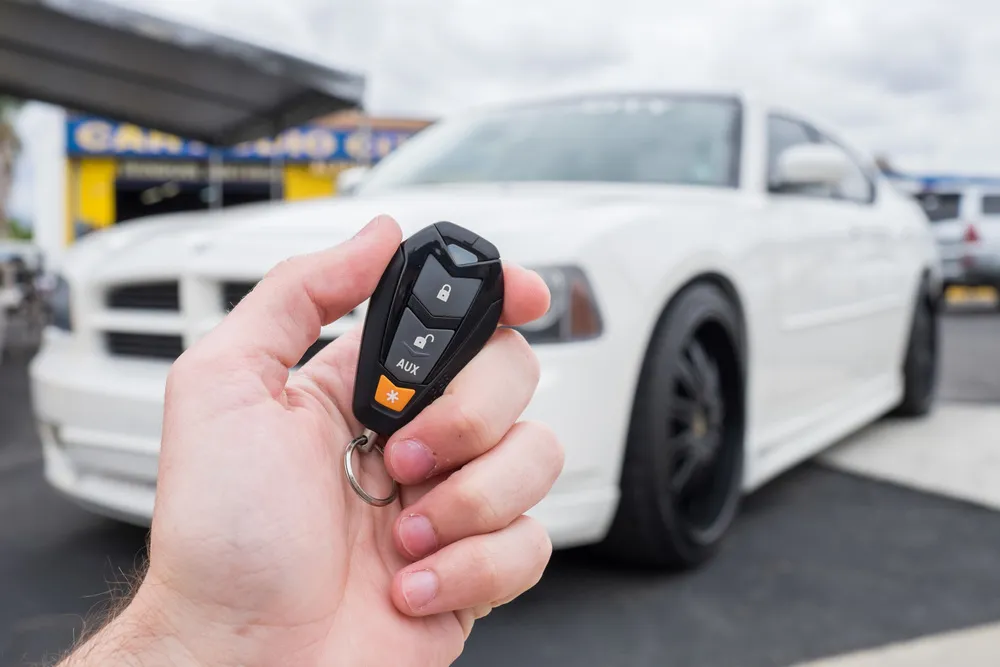
The remote you carry can change how you interact with the alarm.
A one-way remote sends commands to the vehicle.
Common commands may include:
The remote sends the command but does not provide the same feedback available from a two-way system.
A two-way remote sends commands and can receive supported information from the security system.
Compustar states that its two-way systems can notify the remote when a vehicle intrusion is detected.
Viper’s 5808V uses a two-way LED remote that provides confirmation when the vehicle receives commands.
That can be useful if your car is parked somewhere you cannot clearly hear the siren.
A two-way remote can give the owner another notification path without requiring a smartphone connection.
GPS tracking serves a different purpose from alarm sensing.
Its job is vehicle location.
A compatible connected tracker can support functions such as:
Audio Vision installs car tracking systems and GPS trackers for drivers who want location functions added to their security plan.
Connected GPS modules may require a cellular plan.
Ask about ongoing service requirements before choosing the hardware.
The tracker may continue to be physically installed even if a connected subscription ends, but connected location and app functions can depend on an active service plan.
Connected vehicle-security hardware can send information to a phone through a cellular connection.
Compustar security systems can work with compatible DroneMobile equipment.
That can place functions such as alarm alerts, lock control, vehicle location, and remote start on a supported smartphone setup.
Viper offers connected functions through SmartStart Pro hardware on compatible systems.
Phone-based security can be useful when the vehicle is outside the range of a conventional alarm remote.
The vehicle-mounted module communicates through a cellular network rather than relying only on direct remote-to-car radio range.
That also means network coverage and service status matter.
Security and remote start can be combined on many vehicles.
Both Compustar and Viper currently sell systems that place remote-start and security functions in one package.
That can allow one remote or connected app to handle functions such as:
Vehicle compatibility still needs to be checked.
Traditional-key, push-button-start, diesel, hybrid, and manual-transmission vehicles can have different requirements.
If you know you want remote start, mention it before the security hardware is selected.
Planning both functions together can prevent choosing an alarm that does not match the final setup you want.
A security upgrade does not always require replacing the factory key.
Many current systems can communicate with factory locks and other vehicle functions through compatible interfaces.
That may allow you to keep familiar factory controls while adding aftermarket security equipment.
The finished setup can vary.
You may use:
Which functions remain on each control depends on the vehicle and hardware.
If keeping the factory remote is a priority for you, tell the installer before installation.
Audio Vision also provides car door lock services for vehicles needing related lock work.
Push-button-start vehicles need vehicle-aware security planning.
Modern starting systems may use:
That is different from an older vehicle where a mechanical ignition switch controls more of the starting process directly.
Compustar sells Secure Push-to-Start equipment for compatible security installations. Its stated purpose is to disable the push-to-start button while the Compustar security system is armed.
This shows why a modern security build should be selected around the actual vehicle rather than following a generic wiring diagram.
Tell the installer whether your vehicle uses a metal key, transponder key, or push-button start.
Modified vehicles can have security concerns beyond theft of the whole car.
A vehicle with aftermarket wheels may benefit from tilt detection.
A car carrying amplifiers, subwoofers, or other added electronics may lead the owner to choose more notification and sensing functions.
A setup for a modified vehicle might combine:
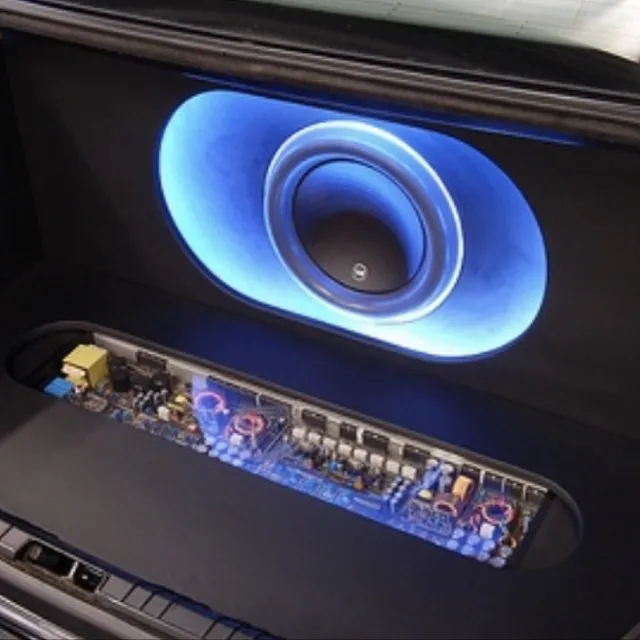
If your vehicle has upgraded car speakers, car amplifiers, or a car subwoofer, mention that when discussing the security build.
The installer can then plan around the equipment already present in the vehicle.
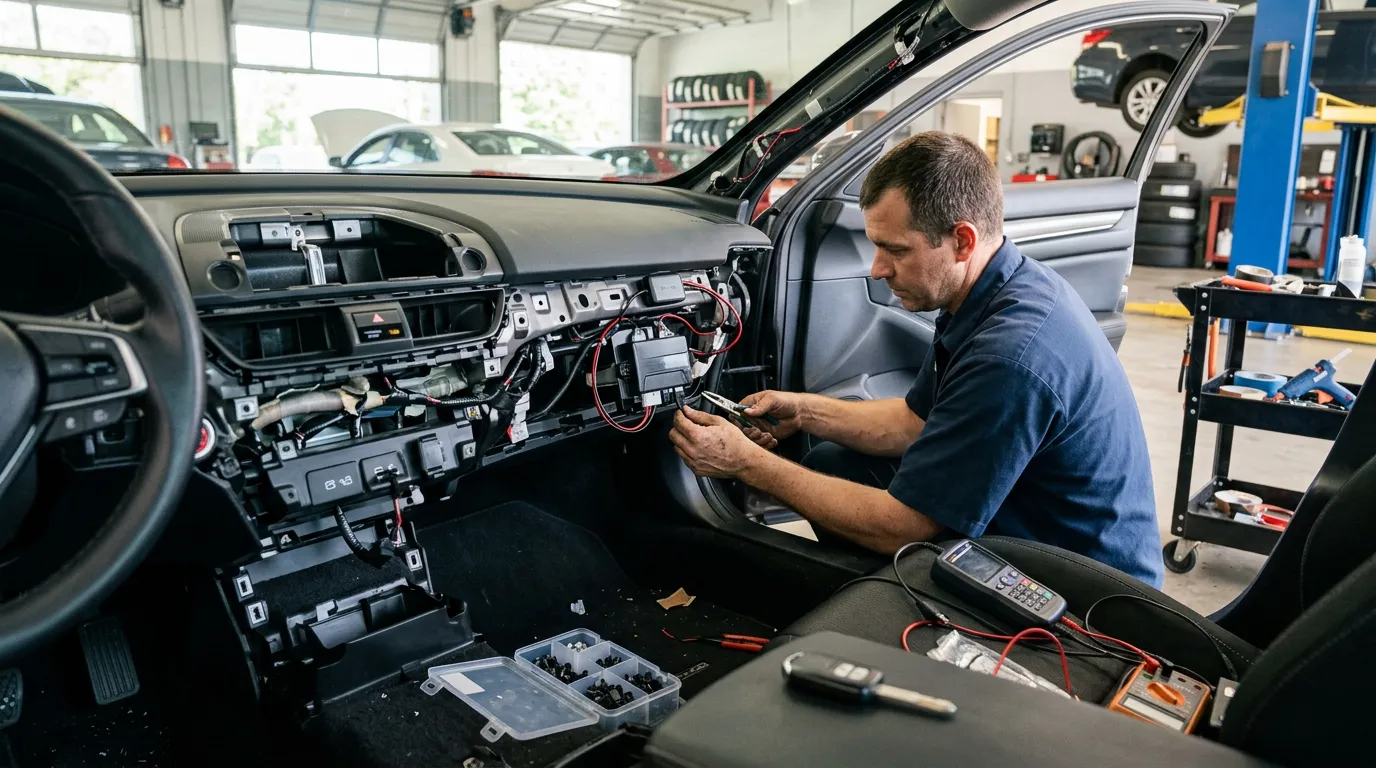
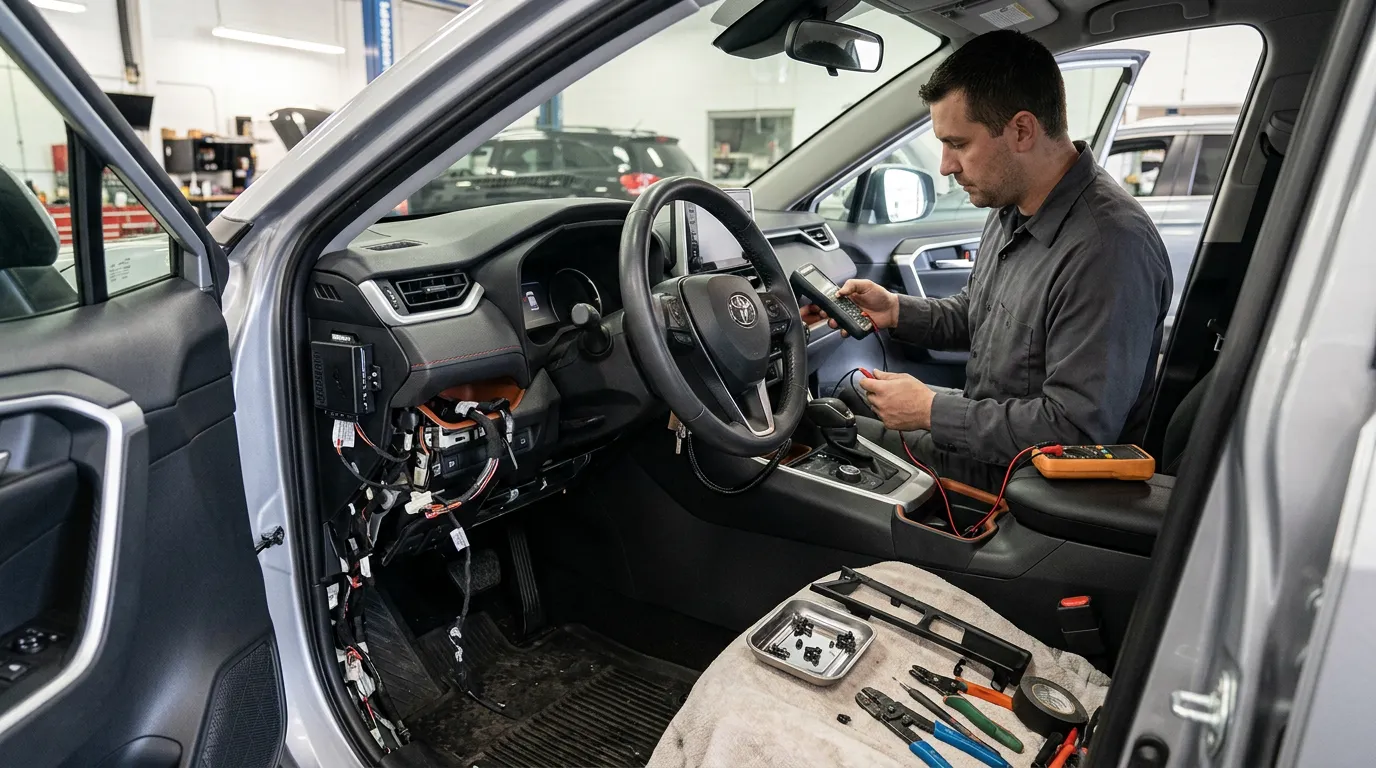
A full security installation involves identifying the vehicle circuits and data connections needed by the chosen system.
The work may involve connections for:
Not every installation uses all of those connections.
The vehicle and selected features determine what is required.
The control module, sensors, antenna, GPS hardware, and related components also need suitable mounting locations.
Wiring should be secured and protected rather than left hanging around pedals or movable interior parts.
Compustar directs customers to trained installers for its vehicle security systems, which reflects how closely these products can connect with vehicle starting, locking, and data circuits.
Connecting the equipment is not the final step.
The completed system needs testing.
Depending on the installed functions, the technician may test:
Factory functions should also continue to operate correctly.
If the vehicle has a factory alarm or immobilizer, the aftermarket system should be checked alongside those factory functions.
Sensor sensitivity may also need adjustment.
The finished system should behave predictably rather than creating repeated false alerts.
Start with the situations you want the system to address.
Discuss:
Ask about:
Ask about:
Consider:
Ask about:
Discuss a combined security and remote-start system before buying either system separately.
The goal is to select functions around your vehicle and parking habits rather than checking every box on a product sheet.
Audio Vision provides car security system installation from its Montclair, CA shop.
Security services include:
Audio Vision also works with security brands including Compustar and Viper.
The shop is located at:
Audio Vision
5521 Holt Blvd
Montclair, CA 91763
Phone: (909) 983-4500
Hours: Monday through Sunday, 9:00 AM to 7:00 PM
Audio Vision serves drivers from Montclair, CA, Ontario, CA, Pomona, CA, Rancho Cucamonga, CA, Claremont, CA, Chino, CA, Chino Hills, CA, and nearby Inland Empire communities.
Before calling, have your vehicle year, make, model, trim, ignition type, and current security equipment ready.
Also think about whether you want two-way alerts, wheel protection, GPS tracking, starter disable, smartphone control, or remote start.
Call (909) 983-4500 or contact Audio Vision online to discuss a complete car security system installation and schedule an appointment.
A full build can include an alarm control module, siren, door monitoring, hood and trunk inputs, impact sensing, tilt sensing, glass-break detection, starter kill, two-way remotes, GPS tracking, smartphone alerts, and remote start. The exact equipment depends on the vehicle and the functions you choose.
No. The alarm detects supported events and can activate the siren or send notifications. Starter kill is a separate function designed to prevent the starter from operating while the security system is armed. Many security systems combine both.
A two-way system can notify you when the vehicle reports a supported alarm event. It can make sense when you often park far enough away that you might not hear the siren. Compustar and Viper both sell current two-way security systems.
Tilt sensing can add detection when an armed vehicle is raised. Compustar’s DAS-II sensor includes tilt detection along with impact and glass-break sensing. No sensor physically prevents wheel removal, but it can trigger the alarm response when the system detects the programmed event.
Yes. Compatible systems can combine traditional alarm functions with GPS-connected equipment. Compustar supports DroneMobile GPS modules, while Viper supports connected SmartStart hardware. Connected tracking may require an ongoing cellular service plan.
Many current security systems can combine alarm and remote-start functions. Vehicle year, ignition type, transmission, and factory electronics determine which hardware and installation method are needed.
Audio Vision installs car security systems at 5521 Holt Blvd, Montclair, CA 91763. The shop also installs alarms and GPS tracking equipment. Call (909) 983-4500 or use the Audio Vision contact page to schedule an appointment.
Looking for the best car audio installation in Montclair, CA? Discover expert tips, top brands, and why Audio Vision is the go-to destination for high-quality car sound systems.
Product Brand: Audio Vision
Product Currency: USD
Product Price: 299
Product In-Stock: InStock

Acima, a flexible lease-to-own option that helps you get the car upgrades you love—without needing perfect credit. Whether you’re looking for car audio, video, security systems, window tint, wheels, auto lighting, or accessories, Acima makes it easy with no credit needed and convenient payment options. Get what you want today and pay over time, hassle-free!

Snap Finance is here to help you get the car audio, video, security, window tint, wheels, lighting, and accessories you need today. With Snap Finance, you can shop now and pay later, thanks to their flexible payment plans that consider more than just your credit score. Applying is fast and easy, and you’ll receive a decision in seconds. Take advantage of stress-free payment options that fit your payday schedule, so you can upgrade your ride without the wait!
Explore the many services we offer by clicking the boxes below


|
|
|
|
|
|
|
|
|
|
|
|
|
|
|
|
Car Security System Installation: What a Complete Build Includes
|
Car Security System Installation: What a Complete Build Includes
|
Car Security System Installation: What a Complete Build Includes
|
Car Security System Installation: What a Complete Build Includes
|
|
|
|
|
|
|
|
|
|
|
|
|
|
|
|
|
|
|
|
|
|
|
|
|
|
|