

Looking for the best car audio installation in Montclair, CA? Discover expert tips, top brands, and why Audio Vision is the go-to destination for high-quality car sound systems.
Product Brand: Audio Vision
Product Currency: USD
Product Price: 299
Product In-Stock: InStock
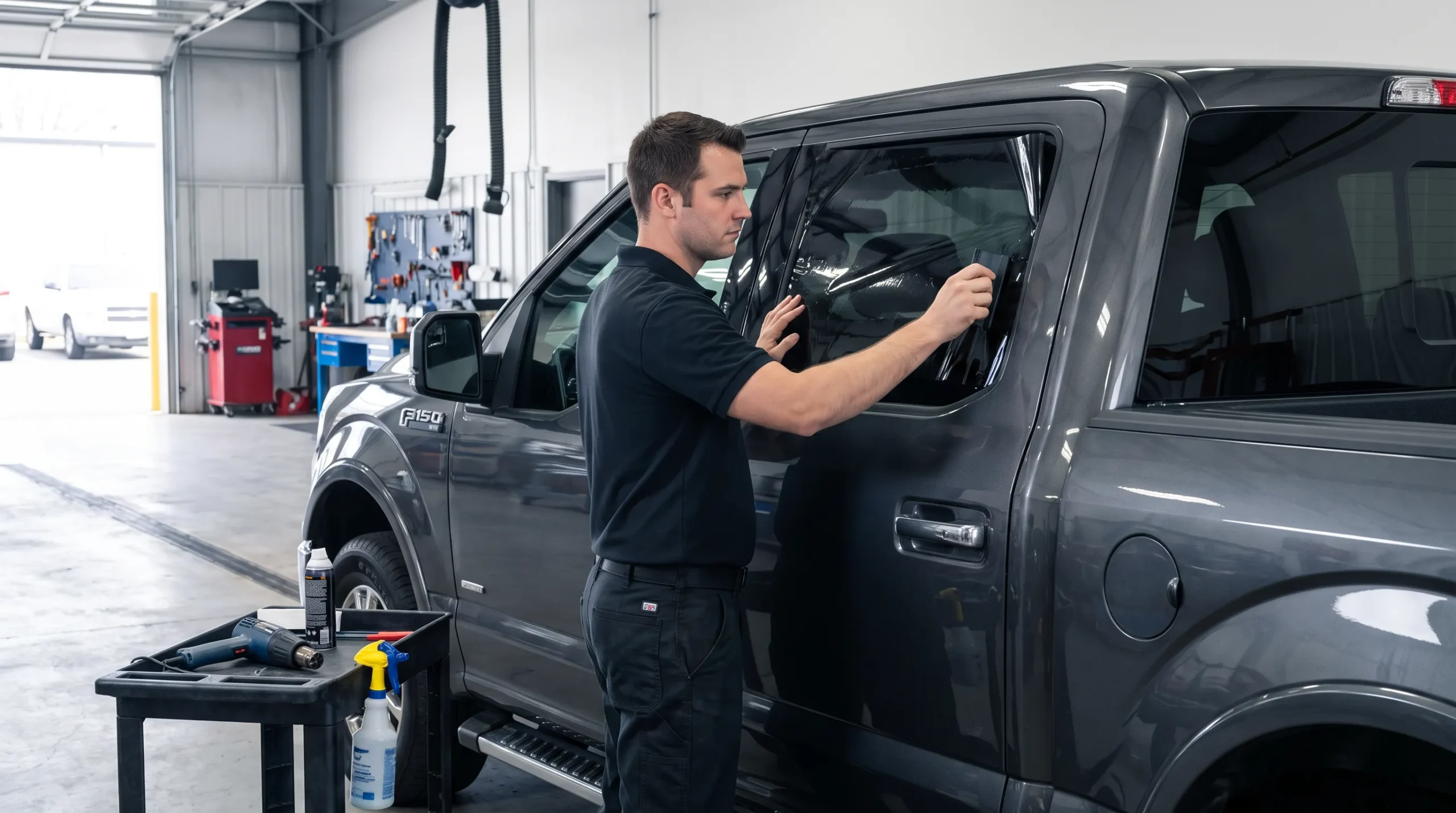
Window tint near me searches can bring up plenty of shops across the Inland Empire, but choosing where to take your vehicle should involve more than finding the closest installer or picking a shade from a wall display.
Film type matters. Installation workmanship matters. California window rules matter. The warranty matters too. So does the shop’s ability to explain what will be installed on each piece of glass before work begins.
A good tint job should have clean edges, suitable film for the vehicle, careful preparation, and a shade selected with California requirements in mind. If heat reduction is one of your goals, you should also understand that a darker film does not automatically mean better heat rejection.
Audio Vision provides window tint installation at 5521 Holt Blvd, Montclair, CA 91763. The shop serves vehicle owners from Montclair, CA, Ontario, CA, Rancho Cucamonga, CA, and surrounding Inland Empire communities.
If you are searching for window tint near me, use this guide to compare tint shops, films, warranties, installation methods, and California rules before scheduling your vehicle.
When comparing results for window tint near me, start with what the shop can tell you about the film and installation.
Ask:
A tint shop should be able to answer those questions without relying on vague claims such as “this one blocks more heat because it is darker.”
Film specifications give you a better way to compare products.
Not all automotive window film is the same.
Two films that look nearly identical from outside the vehicle can have very different published performance numbers.
Manufacturers may list measurements for:
3M’s current Crystalline Series technical sheet, revised in August 2025, lists different values for each shade. The company states that the series blocks up to 99.9% of UV light and rejects up to 64% of total solar energy through vehicle windows, depending on the film and test setup.
See the 3M Crystalline Series Technical Data Sheet.
This is why someone searching window tint near me should ask for the exact film line rather than accepting “ceramic tint” as the whole description.
Ceramic film is popular with motorists who want heat reduction without relying only on a very dark shade.
LLumar describes its ceramic automotive films as using nano-ceramic particles to reduce infrared heat while blocking up to 99% of UV rays on selected products.
See LLumar Ceramic Window Tint.
3M also offers Ceramic IR film. Its published technical sheet lists UV protection up to 99.9% and different infrared and solar measurements across several shades.
See 3M Ceramic IR Series Technical Data Sheet.
Ceramic construction does not tell you everything by itself.
Compare the actual specifications for the film being offered.
A very dark film may look cooler from outside, but darkness and heat rejection are not the same measurement.
This is easy to see in manufacturer data.
3M’s Crystalline line includes lighter films that still provide published infrared and solar-energy performance.
LLumar also sells ceramic films in different shade ranges while marketing heat reduction as a separate film characteristic.
That matters in the Inland Empire, where a vehicle can spend hours sitting under strong sunlight.
When comparing window tint near me, decide whether your goal is:
Tell the shop which result matters most.
That gives the installer a better starting point than simply asking for “the darkest tint.”
VLT means visible light transmission.
It describes how much visible light passes through the glass-and-film setup.
A higher VLT number allows more visible light through.
A lower number allows less.
There is an extra detail that matters when tinting vehicle glass.
The finished VLT is affected by both the film and the glass underneath it.
3M’s technical sheets show different VLT results depending on the glass used in testing.
That means a film labeled with one percentage does not automatically produce that exact finished percentage on every vehicle window.
When California law sets a finished glazing requirement, the glass and film have to be considered together.
California Vehicle Code Section 26708 contains the rules motorists should read before tinting the front side windows.
The law was amended in 2025, with the current language effective January 1, 2026.
Under subdivision (d), qualifying material installed on the front side windows immediately beside the front seat must be:
The law also says the material must be removed or replaced if it tears, bubbles, or becomes worn in a way that prevents clear vision.
Read the current language in California Vehicle Code Section 26708.
This is especially relevant when choosing window tint near me in Montclair, CA.
A shop should understand that the rules for the front side windows differ from those that apply behind the front seat.
California Vehicle Code Section 26708 lists side windows behind the person operating the vehicle among the exceptions to the general window-obstruction rule.
The law also provides an exception for the rear window when the vehicle has outside mirrors on both the left and right sides positioned to show the roadway behind the vehicle for at least the distance stated in the statute.
See California Vehicle Code Section 26708 for the complete language.
This is why rear passenger glass and the rear windshield are often treated differently from the front side windows.
Do not assume the same shade can simply be installed on every window.
Ask the installer to explain the plan glass by glass.
California also places restrictions on material applied to the windshield.
Section 26708 allows transparent material along the top portion of the windshield when the listed conditions are met.
Among those conditions, the lower edge of the material must remain at least 29 inches above the undepressed seat position using the measurement method described by the statute.
The material also cannot be red or amber, cannot use opaque lettering, and cannot create additional reflected glare toward people in other vehicles.
California has a separate medical provision for clear, colorless, transparent film on the windshield when the statutory requirements are satisfied.
If windshield film is something you want, discuss the exact application before installation.
California has specific provisions for people with qualifying medical needs.
Section 26708 allows certain removable sun-screening devices on the front side windows when the person has the required medical documentation.
Section 26708.2 states that transparent removable devices permitted through that exception must be green, gray, or neutral smoke and have at least 35% luminous transmission.
See California Vehicle Code Section 26708.2.
Section 26708 also includes a separate provision for qualifying clear, colorless, transparent UV film when a licensed dermatologist provides the documentation described in the law.
Medical exceptions have their own conditions.
Someone who needs one should read the current statute rather than relying on a general tint chart found online.
UV performance is another reason to compare film specifications.
3M’s August 2025 Crystalline data sheet states that selected film in the line blocks up to 99.9% of UV light.
LLumar states that selected ceramic automotive films block up to or more than 99% of UV rays.
Those claims apply to the manufacturer’s specified products and testing.
Do not assume every automotive tint film has the same UV performance.
Ask for the specification sheet for the product being installed.
This can also help you compare two films that look almost identical once placed on the glass.
Heat performance can be described in several ways.
You might see terms such as:
These numbers are not always interchangeable.
3M’s technical sheet makes a distinction between infrared energy rejection across a broad wavelength range and an infrared-rejection measurement over a narrower wavelength range.
That means comparing one manufacturer’s IR number with another number labeled differently can be misleading.
When comparing window tint near me, ask the shop which measurement it is quoting.
Better yet, ask to see the film manufacturer’s technical data.
A shop may carry more than one film series from the same manufacturer.
One line may focus on appearance.
Another may provide stronger published heat performance.
Another may use ceramic construction.
The warranty can also differ.
This makes the full product name worth knowing.
Instead of asking only, “Do you install ceramic tint?” ask:
“What manufacturer and film series will be installed on my vehicle?”
That gives you something you can verify against the manufacturer’s published specifications and warranty information.
Audio Vision provides window tint for motorists who want to discuss film and shade choices for their vehicle.
Ask for warranty details before installation.
The film manufacturer may cover issues such as bubbling, peeling, cracking, adhesive failure, or other covered defects depending on the product and warranty terms.
3M’s current Crystalline technical sheet states that the product carries a limited lifetime warranty and directs owners to the warranty card for full terms.
LLumar states that its automotive window tint includes manufacturer warranty coverage, with terms depending on the product.
A warranty is only useful when you know:
Keep your invoice and any manufacturer paperwork after installation.
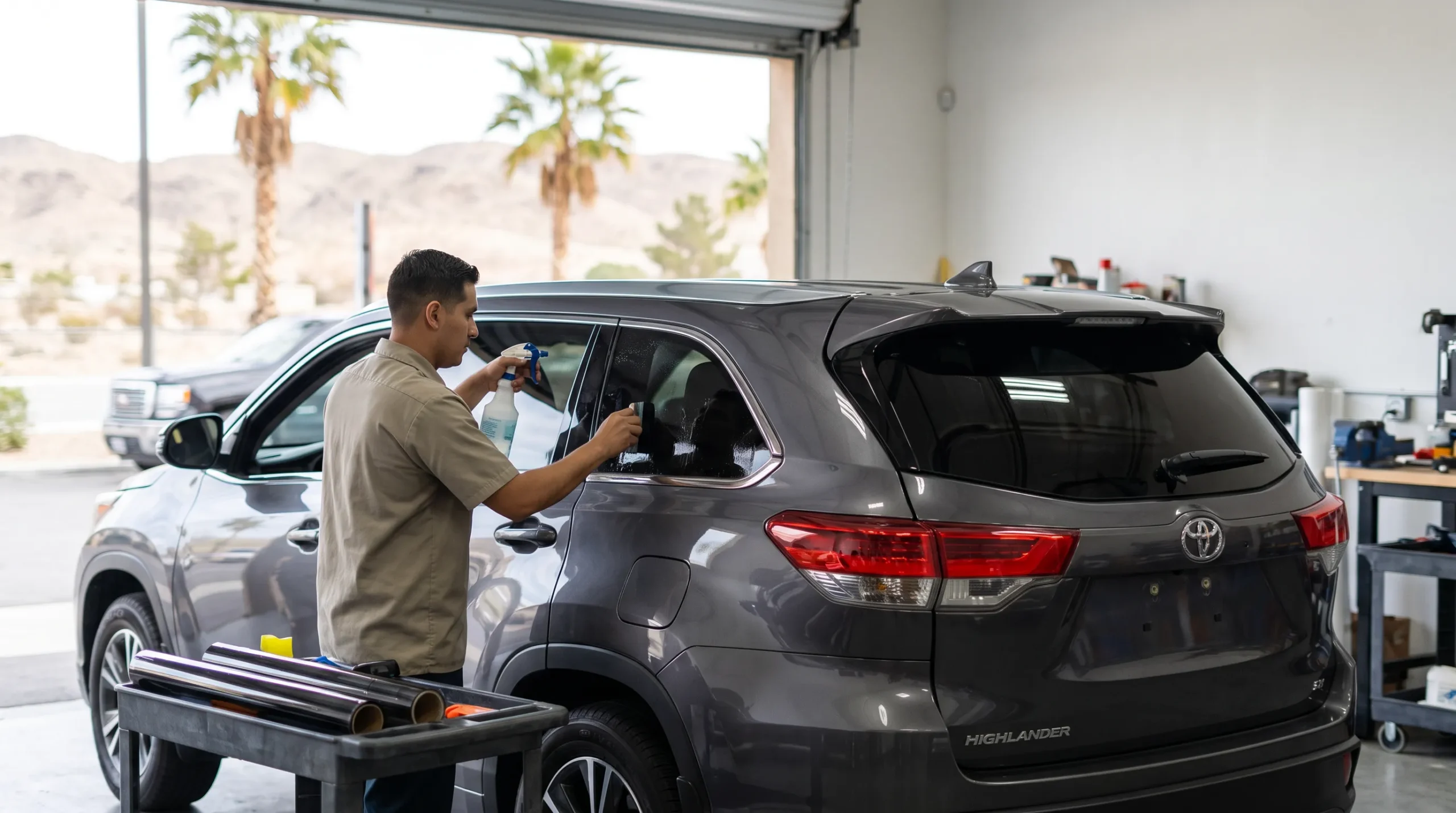
Film specifications matter, but so does the person installing it.
Look closely at completed vehicles.
Pay attention to:
No tint installation should be judged while the film is still going through its initial drying period.
Still, looking at finished work can tell you how the shop approaches trimming and fit.
A shop should also have a clean work area because airborne dust can become trapped between film and glass.
Fresh film may not look exactly the same as fully cured film.
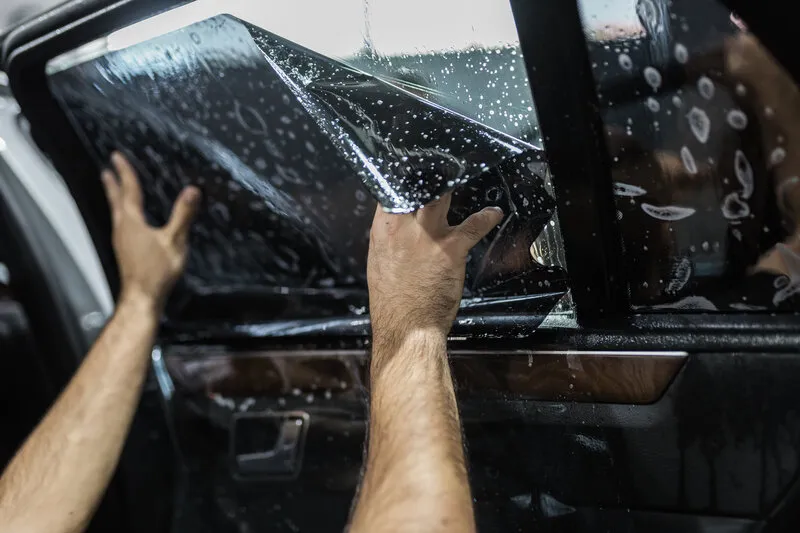
Water is used during many professional installation methods.
3M specifies a wet application method for its current Crystalline automotive film.
Moisture can remain temporarily between the film and glass after installation.
Ask your installer what appearance is normal during the drying period and how long you should wait before rolling down moveable windows.
Do not pick at an edge or push on an area simply because it looks different immediately after installation.
Follow the film manufacturer’s and installer’s care instructions.
Many rear windows have defroster lines attached to the inside surface of the glass.
Window film is commonly installed over this area.
Old film removal deserves care because rear-glass components may be attached to the same surface.
If your rear tint is bubbling, purple, peeling, or damaged, tell the installer before the appointment.
The shop can inspect the existing film and glass before starting removal.
Do not assume old film can always be pulled away quickly without considering what is underneath it.
New film generally needs a properly prepared glass surface.
If the vehicle already has aftermarket film, that material may need to be removed before the new installation.
Removal can take extra work when:
Mention existing tint when scheduling your appointment.
That gives the shop a clearer picture of the job before your vehicle arrives.
Before choosing a result from your window tint near me search, ask the shop a short set of questions.
Get the full product name.
Tell the installer whether appearance, heat, glare, or privacy matters most.
Ask about VLT, UV, and solar or infrared measurements.
Make sure the answer accounts for current California requirements.
Ask what paperwork you receive.
Tell the shop what is already on the vehicle.
Ask about window operation, cleaning, and the drying period.
These questions make it much easier to compare shops based on the work and film rather than marketing claims.
If you are searching for window tint near me around the Inland Empire, Audio Vision is located at 5521 Holt Blvd, Montclair, CA 91763.
The location is convenient for vehicle owners from Montclair, CA, Ontario, CA, Rancho Cucamonga, CA, Claremont, CA, Pomona, CA, Chino, CA, and nearby communities.
Audio Vision has served the Inland Empire since 2006.
Window tint can also be completed alongside other vehicle work available at the shop, including car audio, Apple CarPlay, car security systems, car LEDs, and vehicle wraps.
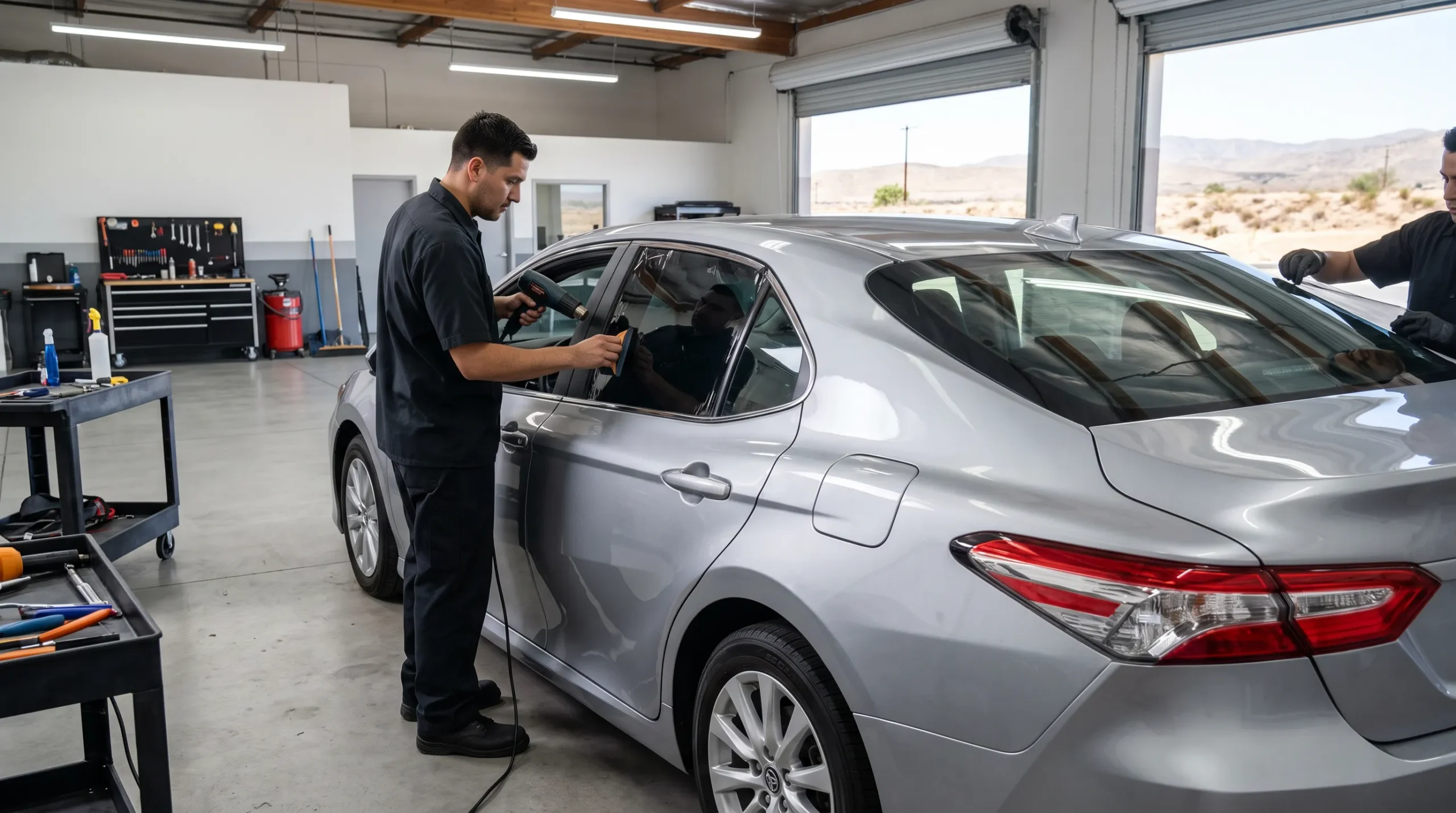
Whether you have a daily commuter, truck, SUV, coupe, or performance vehicle, start by discussing the glass you want tinted and what you want the film to accomplish.
When contacting Audio Vision about window tint near me, have your vehicle information ready.
Provide:
You can also ask about the film series available for your vehicle and the warranty included with the installation.
Audio Vision
5521 Holt Blvd
Montclair, CA 91763
Phone: (909) 983-4500
Hours: Monday through Sunday, 9 a.m. to 7 p.m.
Call (909) 983-4500 or contact Audio Vision online to discuss your vehicle and schedule a window tint appointment.
When comparing window tint near me, ask which film manufacturer and series the shop installs, review completed work, check the warranty, ask for published film specifications, and make sure the shop can explain California rules for the windows you want tinted.
Ceramic films can provide strong published heat and UV performance without depending only on a very dark appearance. Compare the technical data for the specific film rather than assuming every ceramic product performs the same way.
California Vehicle Code Section 26708 contains a specific exception for clear, colorless, transparent material on the front side windows. The material must have at least 88% VLT, and the finished glazing must satisfy FMVSS No. 205 requirements, including the stated 70% minimum light transmission. Other conditions and documentation requirements also apply.
California Vehicle Code Section 26708 treats side windows behind the person operating the vehicle differently from front side glass. The statute also provides an exception for the rear window when qualifying outside mirrors are installed. Check the current statute for the complete conditions.
Not necessarily. Darkness is measured through visible light transmission, while heat performance may be described through total solar energy and infrared measurements. A lighter high-performance film can have stronger published heat data than another darker product.
It depends on the film. 3M lists up to 99.9% UV blocking for its current Crystalline line, while LLumar states that selected ceramic products block up to or more than 99% of UV rays. Check the specifications for the exact product you are considering.
Audio Vision provides window tint installation at 5521 Holt Blvd, Montclair, CA 91763. The shop serves Montclair, CA and nearby Inland Empire communities. Call (909) 983-4500 or use the Audio Vision contact page to schedule an appointment.
Looking for the best car audio installation in Montclair, CA? Discover expert tips, top brands, and why Audio Vision is the go-to destination for high-quality car sound systems.
Product Brand: Audio Vision
Product Currency: USD
Product Price: 299
Product In-Stock: InStock

Acima, a flexible lease-to-own option that helps you get the car upgrades you love—without needing perfect credit. Whether you’re looking for car audio, video, security systems, window tint, wheels, auto lighting, or accessories, Acima makes it easy with no credit needed and convenient payment options. Get what you want today and pay over time, hassle-free!

Snap Finance is here to help you get the car audio, video, security, window tint, wheels, lighting, and accessories you need today. With Snap Finance, you can shop now and pay later, thanks to their flexible payment plans that consider more than just your credit score. Applying is fast and easy, and you’ll receive a decision in seconds. Take advantage of stress-free payment options that fit your payday schedule, so you can upgrade your ride without the wait!
Explore the many services we offer by clicking the boxes below


|
|
|
|
|
|
|
|
|
|
|
|
|
|
|
|
Window Tint Near Me: Choosing a Tint Shop in the Inland Empire
|
Window Tint Near Me: Choosing a Tint Shop in the Inland Empire
|
Window Tint Near Me: Choosing a Tint Shop in the Inland Empire
|
Window Tint Near Me: Choosing a Tint Shop in the Inland Empire
|
|
|
|
|
|
|
|
|
|
|
|
|
|
|
|
|
|
|
|
|
|
|
|
|
|
|